Getting Started
What to Expect at Your First Pottery Class as a Beginner
A minute-by-minute walkthrough of a first pottery class: check-in, apron, demo, hands-on time, and cleanup, plus what to do about first-class nerves.
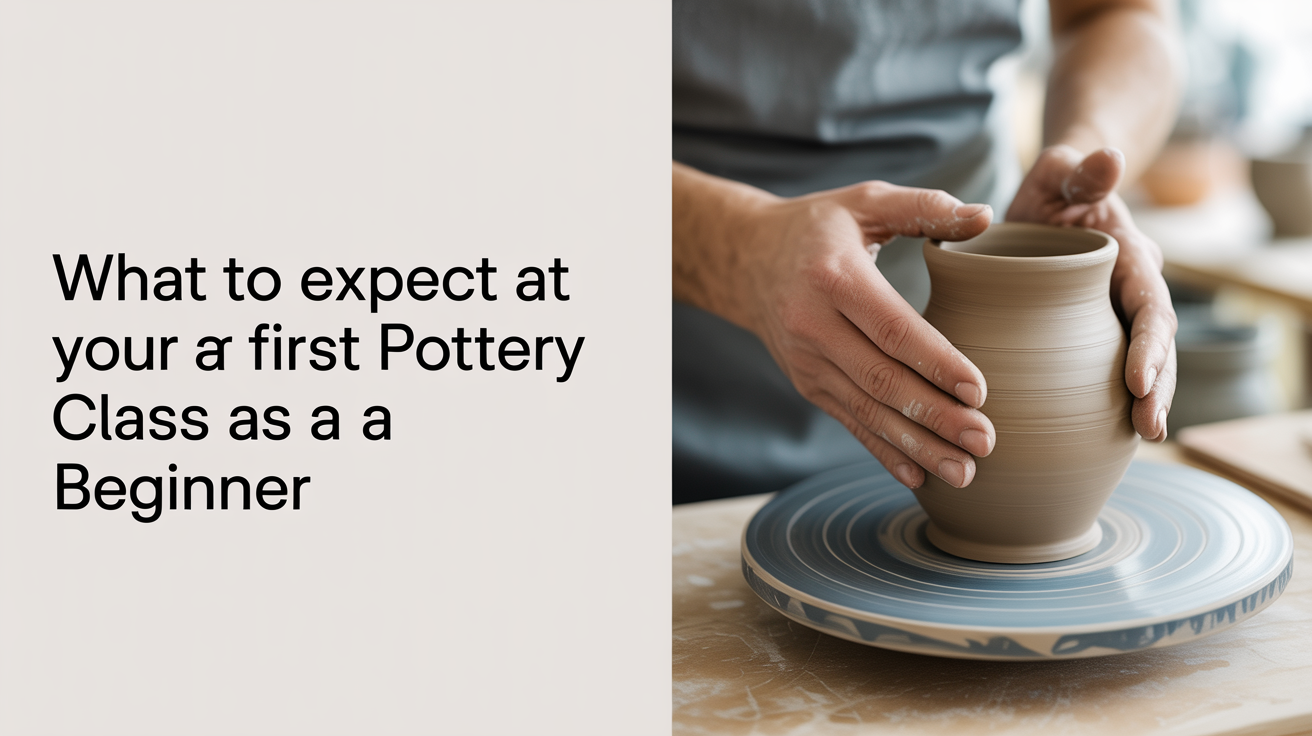
If you booked a first pottery class and now feel a low hum of dread about it, you are not unusual. Almost everyone walks in wondering if they'll make a fool of themselves in front of strangers who already know what they're doing. The honest answer to what to expect at your first pottery class is this: less performance pressure than you think, more waiting around than you'd guess, and a decent chance your first piece looks nothing like what you pictured. That's normal, and it's also kind of the point.
Formats vary a lot from studio to studio, so treat everything below as a general shape rather than a script. But most beginner classes share the same bones: you show up, you get oriented, someone shows you the basics, you get your hands in clay, and then you clean up. Here's what each part actually feels like.
Before You Walk In
Most studios will tell you what to wear and bring when you book, but if they don't, plan for clothes you don't mind getting dusty or damp. Clay dries out and turns to fine dust that settles on dark fabric, and glaze work can splash. Closed-toe shoes are a good idea if the studio has a wheel room, since a dropped tool or a splash of slip on bare feet is unpleasant. Long hair gets tied back. Jewelry, especially rings, usually comes off before you touch the clay.
You generally do not need to bring tools for a first class. The studio supplies clay, aprons, and the basic kit (rib, needle tool, sponge, wire) for everyone in the room. If you decide pottery is something you want to keep doing, it's worth reading about what beginners actually need to buy versus what they can skip before you spend money on gear, since a lot of the flashy stuff sold to new potters gets used once and then sits in a drawer.
If you haven't picked a studio yet, or you're comparing a few options in your area, our guide on finding a pottery class or studio near you covers what to ask about before you commit to a session.
How a Pottery Class Actually Works, Minute by Minute
Check-in and getting oriented
You'll usually arrive 10 to 15 minutes before the class starts. Someone at the front desk or the instructor themselves checks you in, points you to a coat hook or cubby, and hands you an apron if you don't have one already. In a smaller studio this might just be the instructor doing all of it personally. In a larger one there might be a front-desk person and a separate teacher.
Getting a station
Beginner classes are usually set up with either individual wheel stations or a shared table for hand-building, depending on what the class is. If it's a wheel class, you'll get assigned a wheel, a stool, and a bat (the round disk the clay sits on while you throw). If it's hand-building, you'll get a spot at a table with a canvas mat, a rolling pin, and basic tools laid out or within reach.
The demo
Almost every class opens with the instructor demonstrating the skill for the day, whether that's centering clay on the wheel, pinching a bowl, or rolling and joining a slab. This usually runs 10 to 20 minutes. You watch, you can ask questions, and a good instructor will repeat the tricky steps or slow down if the room looks confused. Don't worry about memorizing every step. You'll forget half of it the second your hands hit clay, and that's fine, because the instructor will circle back.
Hands-on time
This is the bulk of the class, often an hour or more. You work on your own piece while the instructor moves around the room, checking in with each person, answering questions, and fixing problems as they come up. This is where a first pottery class stops feeling like a lecture and starts feeling like actual pottery: messy, a little frustrating, occasionally thrilling when something you're pulling on the wheel suddenly holds its shape.
Cleanup
Toward the end of class, there's usually a shared cleanup period. Clay scraps get thrown in a reclaim bucket, tools get rinsed, and the wheel or table gets wiped down. Studios take this seriously because dried clay dust is genuinely bad to breathe, so wiping wet rather than letting things dry and then sweeping is the standard practice almost everywhere.
How Much One-on-One Help You'll Actually Get
This is one of the biggest unknowns going in, and it depends heavily on group size. A class of four or five people gets a lot of individual attention, with the instructor spending several minutes at your elbow, hands guiding yours on the wheel. A class of twelve or more means shorter check-ins and more independent struggling between visits.
Neither setup is better across the board. Smaller classes correct your form faster, which matters a lot on the wheel where a small error compounds quickly. Larger classes are usually cheaper and more relaxed, since less of the room is watching you at any given moment. If a studio doesn't list class size, it's a fair question to ask before you book.
Expect the instructor to demonstrate a fix on your actual piece sometimes rather than just explaining it. That's normal, not a judgment on your skill. It's often faster to show than to describe, particularly with something as physical as centering clay.
The Worries Everyone Has, and Why They're Overblown
Clay under your nails and on your clothes. This happens to everyone, every single class, including people who have thrown pots for years. Short nails help. An apron helps more. A towel at your station catches most of it. Nobody in the room is going to think less of you for having clay-caked hands; it's the uniform of the activity.
Bumping or damaging someone else's piece. Studios generally arrange stations with enough space that this is rare, and shared work often sits on a drying shelf away from where people are actively working. If you're worried about it, ask the instructor where it's safe to set a piece down and where it isn't. That single question solves most of the risk.
Not finishing your project. A lot of first-timers assume they need a finished bowl or cup to walk out with, and get anxious when the class ends with a half-formed lump. Many studios build multi-week series because pottery, especially wheel throwing, is not a one-sitting skill. Trimming, handles, glazing, and firing often happen in later sessions or between classes. A finished first-class piece is a bonus, not the baseline.
Is a pottery class hard for beginners? Centering clay on the wheel is genuinely one of the more frustrating physical skills to pick up, and most people don't get it cleanly on the first try. Hand-building is more forgiving day one. Either way, difficulty in that first session is about coordination, not intelligence or aptitude, and it evens out with repetition faster than most people expect.
If you want a fuller sense of where beginners commonly go wrong, and how to fix it once you're past the first class, this rundown of common beginner pottery mistakes covers the patterns that show up again and again, from over-wetting clay to trimming too aggressively.
What a Good First Class Should Leave You With
You're not being graded, and there's no pass or fail. A first pottery class experience that goes well usually leaves you with a rough sense of how the clay behaves under your hands, one or two specific things to try differently next time, and enough curiosity to want to come back. If you walk out having made something that looks a little lopsided but is unmistakably yours, that's a genuinely good outcome.
If pottery clicks for you in that first session, it's worth reading a broader overview of how to start making things from clay as an absolute beginner, which lays out the path from a single trial class to a regular hobby, including what to learn next and roughly in what order.
Frequently Asked Questions
How long does a typical first pottery class last?
Most beginner classes run somewhere between 90 minutes and three hours, with two hours being common for a single wheel-throwing or hand-building session. Multi-week series usually book each session at a fixed length, so check the studio's listing for the exact time.
Do I need to bring my own clay or tools?
No, not for a first class. Studios almost always include clay and basic tools in the class fee. You may be charged separately for firing your piece, so ask about that policy before you book if it isn't mentioned upfront.
What should I wear to a pottery class?
Comfortable clothes you don't mind getting dusty or a little wet, closed-toe shoes if there's a wheel room, and hair tied back if it's long enough to get in the way. Skip jewelry on your hands and wrists.
Will I actually get to keep what I make?
Usually yes, once it's been trimmed, dried, bisque fired, and often glazed and fired again, which can take several weeks depending on the studio's kiln schedule. A single drop-in class sometimes skips glazing, so ask what happens to your piece after class ends.
Is it normal to feel nervous before a first pottery class?
Completely. Feeling nervous before a first pottery class is close to universal, and it tends to fade within the first fifteen minutes once your hands are actually in the clay and you realize everyone else in the room is also just figuring it out as they go.