Getting Started
The Pottery Tools Beginners Actually Need (and What to Skip)
A practical guide to pottery tools for beginners: what to buy, what to improvise, and what to ignore until you actually need it.
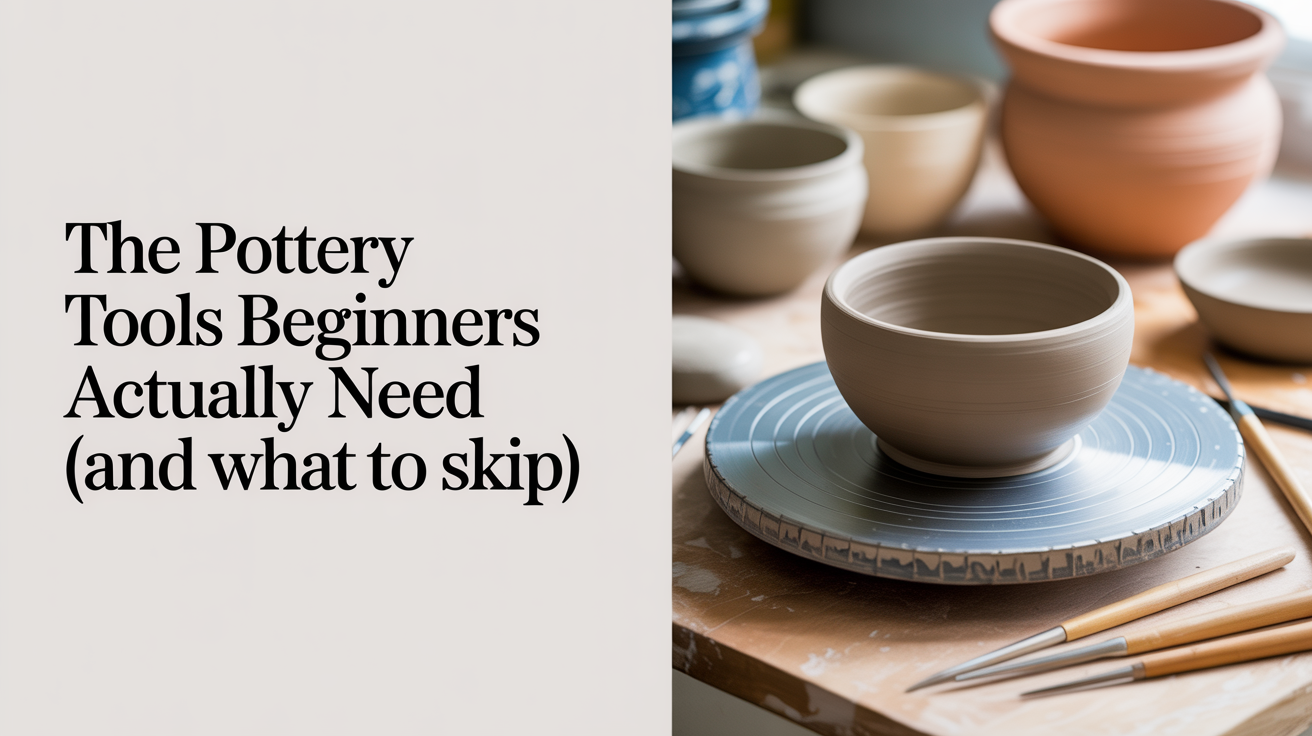
You need far fewer pottery tools than most beginner kits suggest. A wire tool, a needle, a sponge, and something to smooth clay will get you through your first several months. Everything else is either optional, improvised from things already in your kitchen, or genuinely useful only after you have a clearer sense of which direction your practice is heading.
Here is a honest breakdown of what beginner pottery tools actually earn their place, what you can substitute, and what to leave on the shelf until later.
The True Essentials: Seven Tools Worth Owning
These are the pottery tools that almost every beginner will reach for on day one, regardless of whether they are hand-building or throwing on a wheel.
Wire Tool
A wire tool is two small handles connected by a length of wire or nylon cord. You use it to cut finished pieces off the wheel head, to slice a block of clay in half for wedging, and to check for air pockets inside a slab. It costs almost nothing and has no real substitute. A length of fishing line tied around two pencils works in a pinch, but the handles matter more than you would expect after your third hour of studio time.
Needle Tool
A needle tool is a thick metal needle set into a wooden or plastic handle. You use it to score clay before joining pieces, to pierce small holes for drainage or hanging, and to check wall thickness on a thrown pot by inserting it through the wall at an angle. A standard sewing needle pushed into a wine cork works exactly the same way. If you only buy one tool before your first class, make it this one.
Wooden Rib
A wooden rib is a flat paddle, usually with one curved edge and one straight edge. On the wheel, you press it against the outside of a form while your hand supports the inside, smoothing and compressing the clay at the same time. In hand-building, it blends coil seams and burnishes slabs. A wooden tongue depressor (the kind used in medicine) does everything a small rib does, and a popsicle stick works for finer detail. A smooth piece of hardwood cut to shape is also a perfectly good long-term option.
Metal Rib
Metal ribs (sometimes called steel ribs) are thinner and stiffer than wooden ones. They remove slip, compress the clay more aggressively, and clean up the shoulder of a bowl where a wooden rib loses its edge. They are not strictly necessary in the first month, but once you want cleaner surfaces, a metal rib saves considerable time. An old credit card, cut to shape with scissors, produces a surprisingly usable rib for scraping and smoothing slabs.
Sponge
A small dense sponge keeps your clay moist while throwing, soaks up excess water from the bottom of a freshly thrown cylinder, and helps smooth surfaces without dragging. Natural sea sponges are ideal because they hold more water and release it more gently. A piece of synthetic sponge from a kitchen pack is a perfectly adequate substitute. Keep two: one for adding water, one for removing it.
Trimming Tool
A trimming tool (also called a turning tool) is a loop of metal set in a handle, used to carve excess clay from the foot of a leather-hard pot. If you are hand-building, you may not need one for months. If you are throwing on a wheel, you will want one by your third or fourth session, because the foot of a pot matters for how it sits and how it fires. The loop shape matters more than the handle style, so an inexpensive set covers everything a beginner needs.
Fettling Knife
A fettling knife is a thin, flexible blade used to cut clay slabs, trim edges, and clean up the seams on hand-built work. Any small flexible knife with a thin blade can substitute, including a palette knife from a craft store or a thin kitchen paring knife used carefully. It is the one cutting tool that genuinely replaces several others.
Hand-Building vs. Wheel: Where the Tool List Splits
If you are starting with hand-building rather than the wheel, your tool needs are minimal. A needle tool, a wooden rib, a fettling knife, and a sponge handle most of what a beginner hand-builder encounters. A rolling pin (or a section of PVC pipe) and two wooden guide sticks cut to the same thickness produce consistent slabs without a slab roller.
Wheel throwing adds the wire tool and the trimming tool to the essentials. It also eventually adds a sponge on a stick (for reaching the bottom of tall cylinders), but that is a month two purchase, not day one.
The Beginner Starter List
Buy these first:
- Wire tool
- Needle tool
- Small wooden rib
- Dense sponge (two if possible)
- Fettling knife or thin flexible knife substitute
Add within a month or two:
- Metal rib or credit card substitute
- Trimming loop (if throwing on a wheel)
- Scoring tool or fork (a table fork scores clay for joining just as well)
What to Skip for Now
The pottery tool market is full of things that look necessary and are not, at least not yet.
Extruders are useful for making handles and repeated forms at volume. For a beginner making one or two pieces at a time, they add setup and cleanup without meaningful benefit.
Rib sets with six or more pieces usually include shapes you will reach for once in a year. Start with one wooden and one metal rib, learn what you actually want the curve to do, and buy additional shapes based on real gaps you notice.
Slip trailing bottles are for decoration. They belong in the conversation once you have clay that you can actually center, not before.
Ribbon tools with three or more loops in different profiles are fine eventually. One medium loop handles most trimming work for months.
Expensive decorating tools (specialized stamps, press molds, texture rollers) are best chosen after you develop a sense of your own aesthetic. Improvised textures from burlap, lace, or tree bark are often more interesting anyway.
Quick Reference: Tool Table
| Tool | What It Does | When You Need It |
|---|---|---|
| Wire tool | Cuts clay off the wheel; slices blocks | Day one |
| Needle tool | Scores, pierces, checks thickness | Day one |
| Wooden rib | Smooths, compresses, blends seams | Day one |
| Sponge | Adds/removes water, smooths surfaces | Day one |
| Fettling knife | Cuts slabs, trims edges | Day one (hand-building) |
| Metal rib | Removes slip, sharpens surfaces | Month one or two |
| Trimming tool | Carves the foot of thrown pots | Month one (wheel) |
| Sponge on a stick | Reaches inside tall cylinders | Month two (wheel) |
| Extruder | Produces handles and repeated profiles | When making multiples |
| Slip trailer | Decorative line application | After basics are solid |
Setting Up Without Overspending
A practical first kit runs somewhere between $15 and $40 if you buy selectively and substitute where it makes sense. A fork from your kitchen scores clay for joining. An old credit card cut diagonally makes a decent flexible rib. A wine cork plus a sewing needle replaces a $6 needle tool. None of these substitutions are embarrassing; working potters use improvised tools all the time.
If you are taking a class, ask what the studio provides before buying anything. Many studios supply wire tools, sponges, and basic ribs as part of the class fee. You may only need to bring a needle tool and your own trimming loop.
For more on how to think about your first workspace, see the guide on setting up a small pottery studio at home, which covers tables, bats, and storage alongside tools. And if you are still figuring out where to begin with clay itself, pottery for absolute beginners covers the first steps before tools even become relevant.
Frequently Asked Questions
What is the single most important tool for a beginner?
A needle tool. It is cheap, lasts forever, and handles scoring, hole-making, thickness-checking, and fine trimming. Everything else can be improvised in a pinch; the needle tool is harder to fake convincingly.
Can I use kitchen tools instead of pottery tools?
Yes, for several of them. A fork scores clay for joining. A butter knife or palette knife subs for a fettling knife on soft clay. A sponge from a kitchen pack does everything a pottery sponge does. An old credit card, cut with scissors, becomes a flexible rib. The main thing kitchen tools cannot replace well is the wire tool, because the length and tension matter, and the trimming loop, because the metal gauge needs to be stiff enough to cut leather-hard clay cleanly.
Do I need different tools for hand-building versus the wheel?
The core overlap is large: needle tool, rib, sponge, and a cutting blade are useful in both. The wheel adds a wire tool (for cutting off the bat) and a trimming tool (for the foot). Hand-building adds a rolling guide or rolling pin for slabs. You are not looking at two completely different kits.
How do I know when to buy more tools?
Buy a new tool when you hit a specific problem that your current tools cannot solve, not before. If your seams keep showing through on coil-built work, a better rib helps. If your feet are uneven after trimming, a wider loop might be the answer. Buying tools ahead of problems means buying tools you do not understand yet.
Is there a tool that beginners consistently underestimate?
The sponge, consistently. Most beginners start with one small sponge and spend the rest of the session juggling wet and dry tasks with the same piece of foam. Two sponges, one kept damp for adding water and one squeezed dry for removing it, makes throwing significantly cleaner and less frustrating.