Getting Started
Do You Need a Pottery Wheel to Start? Hand-Building vs Throwing
Do you need a pottery wheel to start making pottery? Short answer: no. Learn how hand-building compares to wheel throwing for beginners.
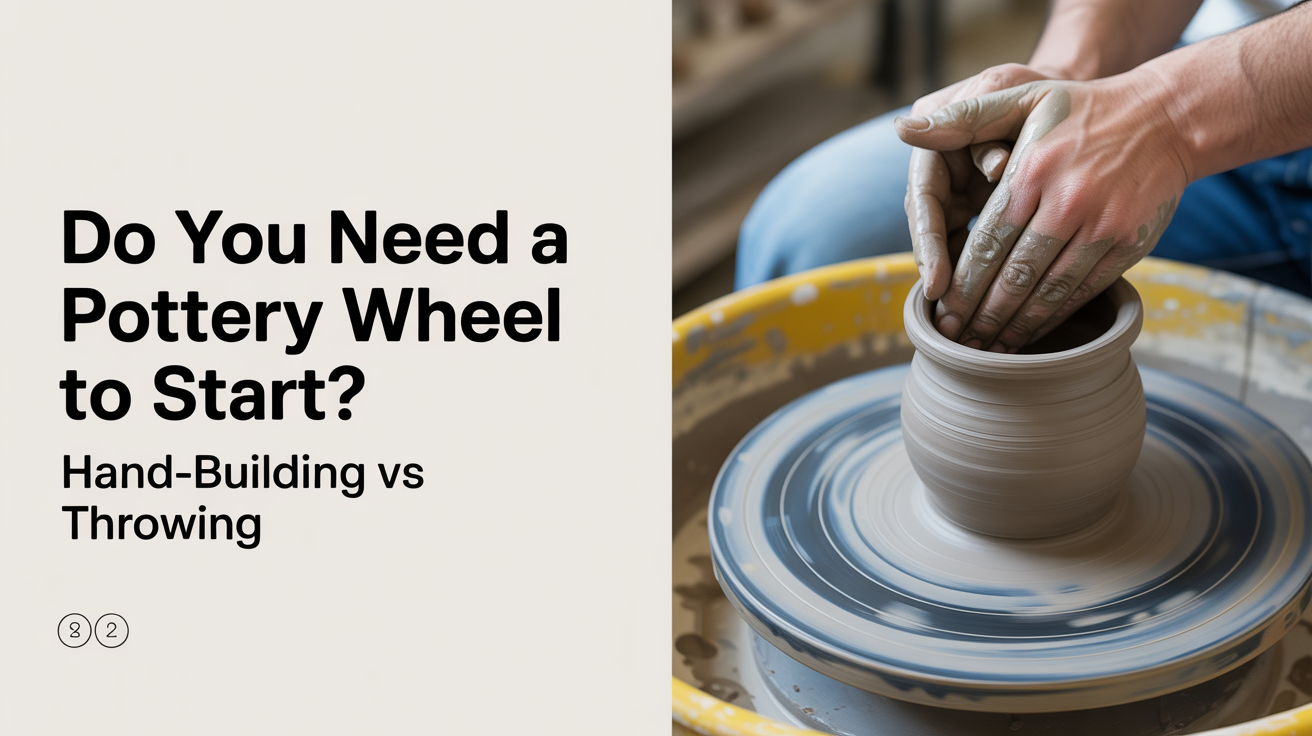
No, you don't need a pottery wheel to start. Hand-building is how most beginners make their first real pieces, and many experienced potters work exclusively without a wheel. If you've been putting off pottery because you assumed you'd need a $600 machine and a dedicated studio, that assumption is worth revisiting.
At a Glance
- You do not need a wheel to make functional, fireable pottery; pinching, coiling, and slab building cover mugs, bowls, plates, and more.
- A basic hand-building toolkit costs $20-50; a beginner wheel setup runs $400-600 or more.
- Wheel throwing has a steep early learning curve centered on centering the clay; most beginners spend several sessions just getting the clay to spin true.
- Both paths still need a kiln, whether that's a home kiln (roughly $700-900 for a small tabletop model) or a community studio membership ($30-80/month in most cities).
- Hand-building predates the wheel by thousands of years and is still how most traditional pottery around the world has always been made.
- For a true beginner, hand-building first is the clearer path: cheaper, gentler learning curve, and the material knowledge transfers directly if you move to a wheel later.
What Hand-Building Actually Lets You Make
Pottery without a wheel covers a wider range of forms than most people expect. The three core hand-building techniques are pinching, coiling, and slab work, and between them you can make mugs, bowls, plates, vases, sculpture, tiles, and almost anything else.
Pinching is the most direct: you press your thumb into a ball of clay and work outward with your fingers. It's how kids make their first pots, but it's also used by professional ceramic artists because the technique leaves expressive marks that wheels don't. A pinched mug has a character that's hard to replicate.
Coiling involves rolling out ropes of clay and stacking them in rings, then smoothing the coils together. It's slower than throwing on a wheel, but it lets you build large forms, asymmetrical shapes, and sculptural pieces that would be impossible to throw. Many traditional pottery traditions around the world never used wheels at all; hand-building came first everywhere ceramics developed, and the potter's wheel itself was a later addition, most likely emerging in Mesopotamia in the mid-to-late third millennium BC as an extension of simpler turntable devices used to rotate hand-built pots while finishing them.
Slab building means rolling out flat sheets of clay (a rolling pin and two wooden guides work fine) and cutting them into shapes to assemble. Square mugs, rectangular planters, plates, and trays all come naturally from slab work. A pasta machine or slab roller speeds things up, but neither is necessary to start.
The main limitation is symmetry. If you want a perfectly round, thin-walled bowl that looks like it came from a pottery studio, hand-building takes more patience to get there. Wheels are designed specifically for that kind of form, since the spinning motion naturally centers the clay in a way that hand and eye have to approximate manually.
Tools You Actually Need
For hand-building, the list is short. A wire clay cutter (a few dollars), a wooden or rubber rib for smoothing, a sponge, and maybe a loop tool for trimming. Total outlay for a basic hand-building toolkit runs $20 to $40. Compare that to a wheel, and the math looks very different.
What the Wheel Adds (and What It Doesn't)
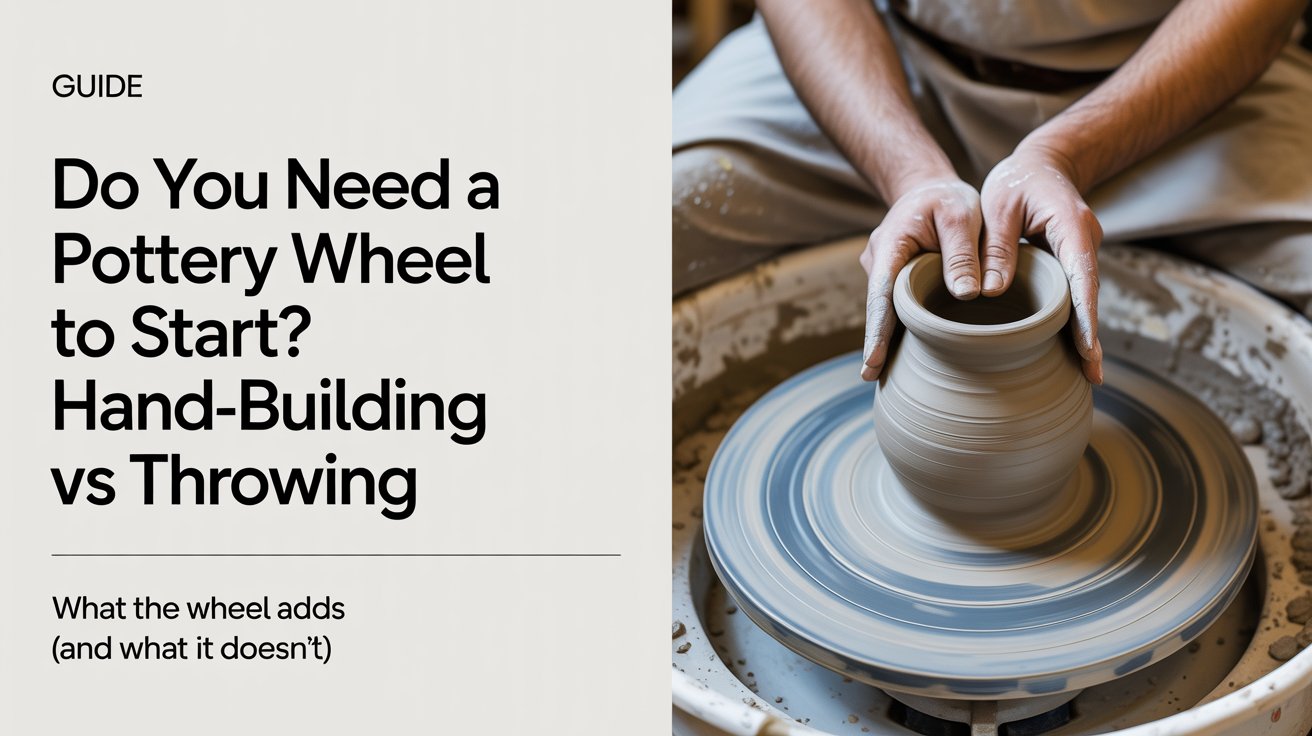
Throwing on a wheel produces round, symmetrical forms quickly once you learn the technique. A skilled potter can pull up a cylinder in a few minutes. The spinning motion creates thin, even walls in a way that's genuinely hard to match by hand.
But "once you learn the technique" is doing a lot of work in that sentence. Wheel throwing has a steep learning curve. Most beginners spend their first several sessions just centering the clay, which is the act of getting the clay spinning smoothly in the middle of the wheel head without wobbling. It's frustrating, it's physical, and it takes real repetition. Some people get it quickly; others take months.
Wheels also take up space. A standard kick wheel or electric wheel is roughly the footprint of a small armchair, and you need room to sit at it and move around. In a small apartment, that's a significant commitment.
The Gear Cost Comparison
A beginner electric wheel runs $400 to $600 new. Decent used wheels show up on marketplaces for $150 to $300, but you need to know what you're buying, check that the motor runs smoothly under load and the wheel head isn't warped. Add bat pins, bats (the removable discs you throw on), and a splash pan if it doesn't come with one. You're probably looking at $500 minimum to get started with a wheel setup.
Hand-building gear, by contrast, can fit in a shoebox and cost less than $50.
Neither method escapes the kiln question. Firing clay is the part that trips up most home beginners. Community studios and ceramic centers solve this because they have kilns and charge by the piece or offer memberships. If you're setting up at home, a small electric kiln starts at around $700 to $900 for a tabletop model. Electric kilns, which became widely available for small-scale and hobby use over the course of the 20th century, generally run on standard household or heavy-duty circuits rather than the gas lines a fuel-fired kiln needs, but a full-size unit still typically needs a dedicated 240V outlet. That cost applies to both throwing and hand-building equally.
Hand-Building vs Wheel Throwing: A Direct Comparison
| Factor | Hand-Building | Wheel Throwing |
|---|---|---|
| Startup cost | $20–$50 for tools | $400–$600+ for wheel |
| Learning curve | Gentle; first pieces come quickly | Steep; centering takes weeks |
| Space needed | A table and a chair | Dedicated floor space (~4 sq ft) |
| Forms you can make | Anything: organic, sculptural, angular | Best for round, symmetrical vessels |
| Portability | Very portable | Fixed setup |
| Physical effort | Low to moderate | More physical (especially centering) |
| Time to a finished first piece | Same session | Several sessions, once centering clicks |
| Typical clay body | Smooth to lightly grogged earthenware/stoneware | Smooth, plastic throwing body |
Pottery Without a Wheel: What Beginners Get Right
People learning pottery without a wheel often make better early progress for a simple reason: they're not fighting the wheel. Hand-building lets you stop, look at your piece, and make deliberate choices. You're not racing a spinning lump of clay that wants to fly off center.
You also build a tactile understanding of clay itself, how it responds to pressure, how thick walls need to be to survive drying and firing, what leather-hard feels like versus bone dry. A clay body with some grog, crushed and pre-fired clay mixed back into the raw material, is a useful teacher here too, since it "adds structural strength to hand-built and thrown pottery during shaping," so you can feel the difference a well-chosen clay body makes before you ever touch a wheel. That foundation transfers well if you later decide to try throwing.
A good starting point for understanding the full landscape of pottery for absolute beginners is to get a feel for what the clay can do before you commit to a specific technique. Most community studio introductory classes teach hand-building first for exactly this reason.
If you do eventually want to throw, that knowledge of clay behavior makes the wheel less baffling. The centering is still hard, but at least the clay won't be a mystery.
Setting Up to Hand-Build at Home
The space requirements for hand-building at home are genuinely modest. A sturdy table, a canvas work surface (about $10 for a yard of canvas), and somewhere to store clay. A 25-pound bag of clay runs $20 to $30 and lasts a beginner several sessions, often eight to twelve small pieces depending on how large you build.
The main thing you'll need to figure out is firing. Options include:
- Community studio membership ($30–$80/month in most cities): access to kilns, wheels, tools, and usually instruction
- Local ceramics classes: often include clay and firing in the cost
- Bisque-fire services: some studios fire pieces for a per-piece fee even if you're not a member
- Home kiln: viable if you're serious about the hobby and have a dedicated space; check your electrical panel first (most small kilns need a 240V outlet)
For setting up a functional workspace, the guide on how to set up a small pottery studio at home covers what you actually need versus what's nice to have.
Which Should You Choose as a True Beginner?
Start with hand-building. This is a clear recommendation, not a hedge.
Here's the practical case. Hand-building lets you make finished, firable pieces in your first session. The tools are cheap. You can work at a kitchen table. You'll learn how clay moves, dries, and behaves without also fighting the coordination challenge of centering on a wheel.
If you take a class and fall in love with throwing, great. Wheels will still be there. You'll actually be better prepared for them because you'll already understand the material.
If you buy a wheel first and find the learning curve discouraging, you've spent $500 on something sitting in a corner. That happens more than people admit.
The question "do you need a pottery wheel to start" has a clear answer: no. And for most beginners, not starting with one is the smarter move.
Once you're ready to think about tools specifically, the breakdown of pottery tools beginners actually need will help you avoid buying things that look useful but mostly collect dust.
Frequently Asked Questions
Can you make functional mugs and bowls without a wheel?
Yes, absolutely. Pinched mugs, slab-built mugs, and coiled bowls are all entirely functional once fired. They won't look like production pottery, but they hold liquid, go in the dishwasher (with a food-safe glaze), and hold up with normal use. Many potters prefer the handmade look precisely because it's distinct from thrown work.
Is hand-building easier than wheel throwing?
For beginners, yes. Hand-building produces recognizable results faster, and the techniques are more forgiving of hesitation. Wheel throwing has a skill wall at the start (centering) that can take weeks to clear. That doesn't mean hand-building is simple, just that the early progress feels less like fighting.
Do I need a kiln to do pottery at home?
You need access to a kiln to fire clay properly. You don't need to own one. Community studios, university extension programs, and some ceramic supply shops offer firing services. Air-dry clay exists as an alternative, but it's not food-safe and isn't the same experience as working with fire clay.
What type of clay is best for hand-building?
Grogged clay (clay with small particles of fired clay mixed in) is forgiving for hand-building because the texture gives the walls structural grip. A smooth stoneware or earthenware without too much grog works fine for pinching and slabs. Very fine porcelain is harder to hand-build with because it's less forgiving of uneven walls. For a first bag, a mid-fire stoneware is a practical choice.
How long does it take to learn hand-building basics?
You can make a simple pinched bowl in your first sitting. Getting consistent results, knowing how thick to leave walls, understanding when to stop before the clay gets too soft, takes a few sessions. A 6-week beginner class typically covers all three hand-building methods with enough time to fire a small collection of pieces.
If I'm on a tight budget, is it worth skipping the wheel entirely?
For most beginners, yes, at least at first. A $40 hand-building kit plus a studio firing fee gets you making real, finished pottery immediately, while the same budget barely covers a used wheel with no bats, no splash pan, and no firing plan. Save the wheel purchase for after you've taken a class or two and know you want to commit to throwing specifically, rather than buying it as a guess.