Glazing & Decorating
Underglaze for Beginners: Adding Color and Designs
Learn how to use underglaze to add color and detail to your pottery. Covers greenware vs bisque application, layering coats, and sealing with clear glaze.
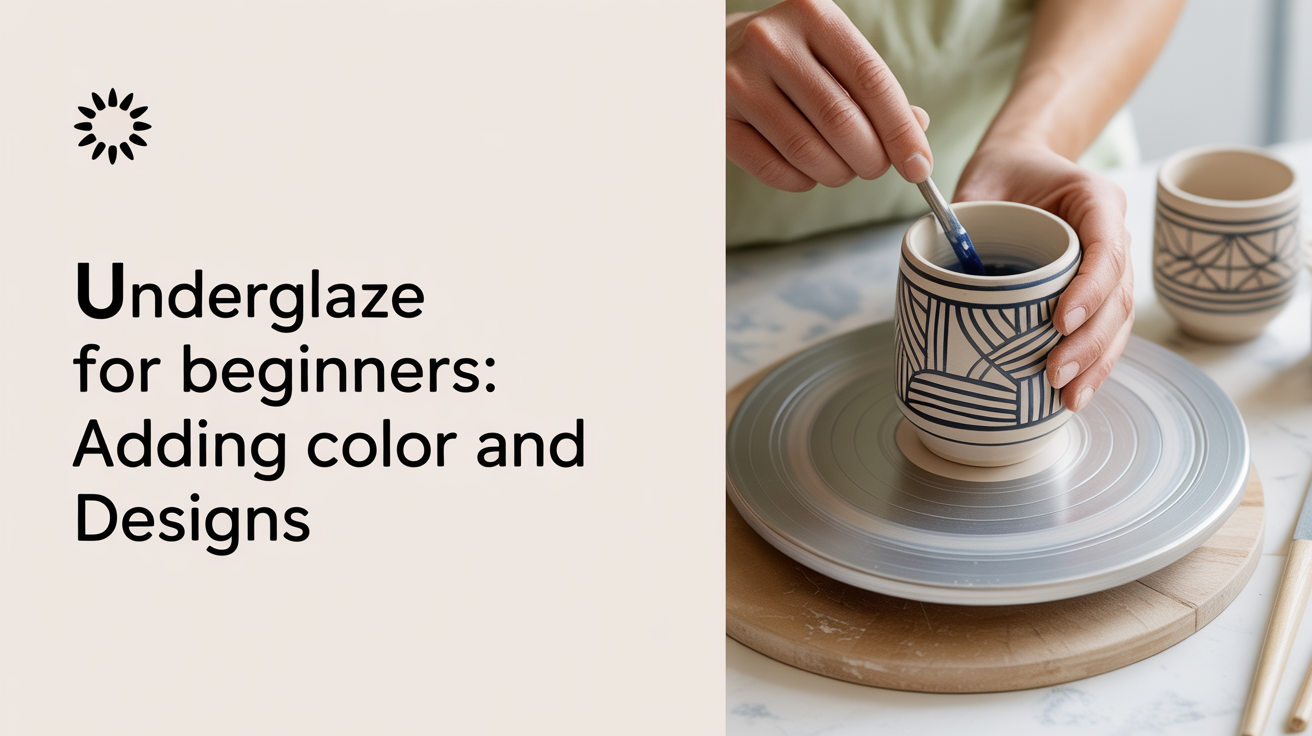
Underglaze is a colored slip or ceramic paint you brush directly onto your clay to add designs, patterns, and color. You can apply it to greenware (unfired clay) or bisque (once-fired clay), and it stays put under a clear glaze that gets fired on top. It is one of the most beginner-friendly ways to add detail to your work, because the colors stay sharp and the process is forgiving.
What Underglaze Actually Is
Underglaze is made from colorants, clay, and water, mixed to a consistency you can brush, sponge, or trail onto your piece. The "under" in the name tells you exactly where it goes: beneath a glaze layer, not on top of it. Most commercial underglazes come in small bottles or jars, ready to use straight from the container.
The colors you see in the jar are close to what you get after firing, which makes planning a design much easier than working with raw glaze materials. They come in a huge range of hues, from bright primary colors to muted earthy tones, and they fire to a flat, matte finish on their own. Add a clear glaze over them and you get that glossy surface most potters are after.
One thing to understand early: underglaze does not waterproof your clay. It is a decorating layer, not a functional sealer. You still need a food-safe glaze on top if your piece will hold food or drink.
Underglaze vs Glaze: Understanding the Difference
These two materials serve different purposes, and mixing up the timing of when to apply them is a common beginner mistake.
| Underglaze | Glaze | |
|---|---|---|
| When applied | Greenware or bisque | Bisque only (typically) |
| Purpose | Color and surface design | Waterproof, food-safe finish |
| Fired finish | Matte (unless top-coated) | Glassy or matte depending on type |
A beginner's guide to how pottery glaze works goes deeper into the chemistry, but the short version is that glaze melts into a glass-like layer at high temperatures. Underglaze stays beneath that layer and provides the color you see through it.
You can sometimes apply underglaze over a raw glaze layer (called "overglaze" technique in reverse), but for beginners, the cleaner approach is: paint underglaze first, fire to bisque, apply clear glaze on top, fire again.
Applying Underglaze to Greenware vs Bisque
On Greenware
Greenware is fragile and thirsty. When you apply underglaze to bone-dry greenware, the clay absorbs moisture quickly, which can cause thin pieces to crack if you go back over the same spot too many times. Work steadily, keep your strokes deliberate, and avoid scrubbing.
The advantage of decorating at the greenware stage is that you only need one firing after glazing instead of two. The underglaze and glaze both go into the kiln together for the glaze fire. Some potters love this efficiency; others find the extra bisque firing gives them more control.
On Bisque
Bisque is the more common surface for painting with underglaze, and for good reason. The clay is no longer fragile, the surface is porous enough to hold the underglaze well, and mistakes are easier to correct. If you paint a line you do not like, you can often scrape it off gently with a loop tool or damp sponge before it dries fully.
Apply your underglaze in thin, even coats. Let each coat dry to the touch before adding the next. Rushing this step leaves streaky results.
Layering Coats for Solid Color
Most underglazes need 2 to 3 coats to reach full opacity. A single coat often looks thin and patchy after firing, even if it looks solid when wet. Two coats is the minimum for solid coverage; three coats is the safe standard for deep or saturated colors.
A few practical tips for layering:
- Let each coat dry completely before adding the next, even if that means a few minutes between passes.
- Alternate your brush direction slightly on each coat (first coat horizontal, second coat vertical) to fill any gaps.
- Thin spots show up more after firing than before, so err on the side of more coats in areas where you want solid color.
- Some colors, especially yellows and light pinks, are naturally more translucent and may need a fourth coat.
Thicker coats are not the answer. A heavy single application can crack or peel during firing. Multiple thin coats bond better and give you cleaner results.
Line Work and Detail Painting
Fine detail is where underglaze really earns its place in the studio. The consistency is similar to acrylic craft paint, so most of the brushwork skills you already have translate directly.
A few things that make detail work easier:
- Use a fine liner brush (size 10/0 or 0) for lines and lettering.
- If you want very crisp edges, let your base color dry fully before painting adjacent colors.
- Trailing (using a squeeze bottle with a fine tip) gives you consistent line width for patterns like dots or grids.
- Sgraffito through underglaze, where you scratch through a layer to reveal the clay color beneath, works beautifully with a thick underglaze application on bisque. The technique is covered in detail in this guide to slip and sgraffito decoration.
- Stamping with foam shapes, cut sponges, or commercial ceramic stamps picks up underglaze well and is a fast way to create repeating patterns.
Keep a cup of water and a clean damp sponge nearby. You can thin underglaze slightly if it drags on the surface, and you can clean up edges while the paint is still wet.
Sealing with Clear Glaze
Raw underglaze fires matte, which can be exactly what you want for a natural, contemporary look. For most functional ware, though, you will want a clear glaze on top. It adds shine, protects the surface from scratches and staining, and makes the piece easier to clean.
The process for applying glaze by brushing, dipping, or pouring is the same whether you have underglaze decoration underneath or not. The main thing to watch: make sure your underglaze is completely dry before you apply the clear glaze. If it is not, the moisture from the glaze can cause the underglaze to smear or lift.
Apply the clear glaze in 2 to 3 coats as well, using the same layering logic. A single thin coat of clear glaze will look watery and uneven after firing. Aim for consistent, slightly opaque coverage.
After both firings are complete, the colors you painted will show through the glassy clear layer, bright and permanent.
A Note on Food Safety
Underglaze on its own is not food safe. The colorants in underglaze are not designed to contact food or liquids directly. Any piece intended for functional use, plates, bowls, mugs, must have a food-safe clear glaze applied over the underglaze and fired to the correct temperature for that glaze.
If you are making decorative pieces only, the clear glaze is optional. But if there is any chance the piece will hold food, err on the side of caution and apply the clear coat.
Always check that your clear glaze is rated food safe by the manufacturer, and confirm that your firing temperature matches the cone range specified on both the underglaze and the glaze. A mismatch in cone temperatures can cause crawling, pinholes, or colors that shift unexpectedly.
Frequently Asked Questions
Can I mix underglaze colors together?
Yes. Most commercial underglazes mix cleanly, similar to acrylic paints. Mix them on a palette before applying. Test new color combinations on a test tile first, since some combinations shift during firing in ways that are hard to predict from the wet color alone.
Do I have to fire underglaze before applying clear glaze?
Not necessarily. If you applied underglaze to greenware, you can apply clear glaze directly and fire once. If you applied underglaze to bisque, you typically apply the clear glaze and fire again. Either path works; it depends on your workflow and your kiln schedule.
Why does my underglaze look faded after firing?
The most common reason is too few coats. One coat of underglaze usually fires lighter and more transparent than it looks wet. Try 3 coats on your next piece. The other possibility is that the firing temperature was too high for that particular underglaze, which can burn off some colorants.
Can I use underglaze over a glaze layer?
Technically yes, but the results are unpredictable for beginners and the underglaze may crawl or bead up on the glassy surface. It is much easier to apply underglaze first, let it dry, then add glaze on top. Stick to that order until you are comfortable with how your specific materials behave.
Is underglaze the same as slip?
They are related but not the same. Slip is liquid clay used for joining, casting, and surface decoration (including sgraffito). Underglaze contains colorants and is specifically formulated for painting detailed designs. You can color slip with oxides or stains to make a decorating slip, but commercial underglaze is more consistent and easier to control for fine detail work.