Glazing & Decorating
How Pottery Glaze Works: A Beginner's Guide
Curious how pottery glaze works? Learn what glaze is made of, how it melts in the kiln, and what makes a glaze food-safe in this beginner's guide.
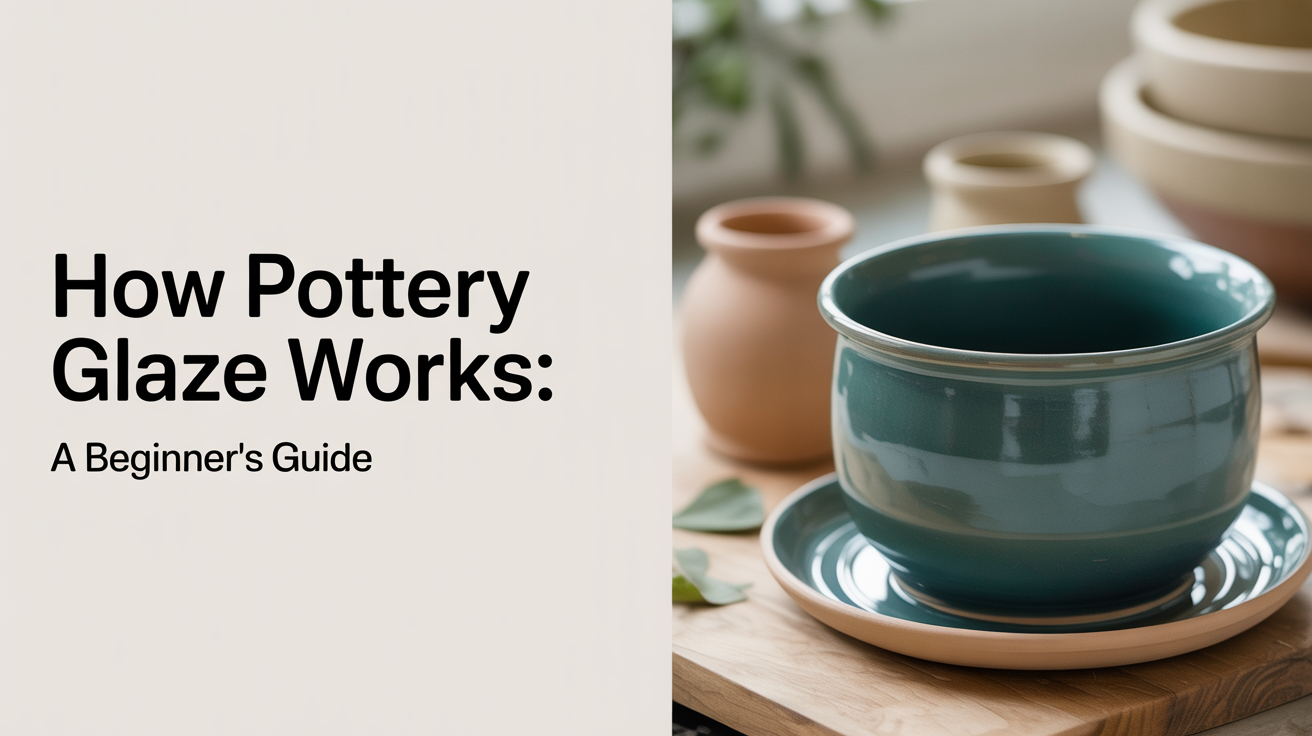
Pottery glaze is a thin layer of glass fused onto the surface of fired clay. Understanding how does pottery glaze work comes down to three things: what goes into the glaze recipe, what happens inside the kiln, and how those raw powders turn into the smooth, colorful surface you pull out at the end of a firing. None of it requires a chemistry degree, but a little background makes you a much more confident glaze user.
What Glaze Is Actually Made Of
Glaze for beginners often arrives pre-mixed in a bucket, which is handy but hides the fact that glaze is just a carefully balanced recipe of minerals suspended in water. Pottery glaze explained at its simplest: you're making a recipe that will melt into glass at a specific temperature and stick to your pot instead of running off onto the kiln shelf.
Every glaze recipe contains three types of ingredients working together.
The Glass Former: Silica
Silica (SiO2) is the backbone of every glaze. It's what actually becomes glass. On its own, silica melts at around 3100°F (1700°C), which is far hotter than any studio kiln. That's why silica needs help from the second category of ingredient.
The Flux: Making Things Melt Sooner
Fluxes lower the melting point of silica so the glaze becomes liquid at the temperature your kiln actually reaches. Common fluxes include:
- Calcium carbonate (whiting) for mid-fire and high-fire glazes
- Potassium feldspar which brings both flux and some silica in one material
- Lithium carbonate a strong flux used in small amounts
- Boron (often from Gerstley Borate or frits) essential for low-fire glazes below cone 06
The type and amount of flux you use directly shapes the character of the finished glaze. High-calcium glazes tend toward satin or matte surfaces. Sodium and potassium produce a glossier, more fluid result.
The Stabilizer: Alumina
Alumina (Al2O3) is the glaze's brake pedal. Without it, a melted glaze would run right down the pot and pool on the kiln shelf. Alumina stiffens the melt, keeps the glaze where you put it, and contributes to durability. It also raises the maturing temperature slightly. Most alumina in studio glazes comes from kaolin (china clay) or ball clay, both of which also add a little raw strength to the unfired glaze so it adheres to the pot before firing.
A Quick Reference Table
| Ingredient | Role | Common Source |
|---|---|---|
| Silica | Glass former | Silica 325 mesh, flint |
| Flux | Lowers melting point | Whiting, feldspar, Gerstley Borate |
| Alumina | Stabilizes the melt | Kaolin, EPK, ball clay |
| Colorant | Adds color | Iron oxide, cobalt carbonate, copper carbonate |
Colorants sit outside the three-part framework because they don't change the melt chemistry much at normal percentages. Iron oxide at 4% gives you a warm amber; cobalt carbonate at 0.5% produces a strong blue. Small additions, big visual impact.
How Glaze Melts in the Kiln
Raw glaze powder on a bisqueware pot looks chalky and fragile. The transformation happens gradually during the firing cycle, not all at once.
As the kiln climbs from room temperature toward cone temperature (the point where the kiln is hot enough for your particular glaze), a sequence of changes unfolds. Early on, the water burns off and organic binders disappear. Around 1000°F (538°C), carbonates start releasing CO2, which is why slow firings give cleaner results. By the time you reach the upper range, the flux materials soften and begin pulling the silica and alumina into solution together.
At peak temperature, the whole thing is a viscous liquid sitting on the pot's surface. Surface tension keeps it from flowing freely if the alumina balance is right. The silica, flux, and alumina have dissolved into each other to form a unified glassy melt.
Then the kiln cools. The glaze solidifies in place, chemically bonded to the clay body beneath it. That bond is partly physical (the glaze soaks slightly into the clay surface) and partly a gradual transition zone where clay and glaze share some of the same molecules. A well-fitted glaze cools at almost the same rate as the clay body it's on, which matters more than beginners usually realize.
Gloss vs. Matte: What Changes the Surface
The glossy or matte quality of a fired glaze comes from its molecular structure after cooling, and from how much alumina and silica are in the recipe relative to flux.
Glossy glazes have a relatively low alumina-to-silica ratio and enough flux to produce a very fluid melt. The surface cools into a smooth, reflective glass. These are generally the easiest glazes to make food-safe because the glass surface has fewer microscopic pores.
Matte glazes either have higher alumina content (which produces a more viscous melt that stays slightly rough) or they form tiny crystals as they cool. Calcium mattes are a classic example: the calcium reacts with silica during cooling to create microscopic calcium silicate crystals that scatter light instead of reflecting it cleanly. The surface feels dry to the touch.
Satin glazes sit between the two. Most studio potters find satin surfaces the easiest to love because they're less fingerprint-prone than high-gloss and more durable than a true dry matte.
Temperature matters here too. A glaze recipe designed for cone 10 (around 2345°F / 1285°C) fired at cone 6 (2232°F / 1222°C) will often come out underfired and matte because the flux didn't fully melt. The same recipe fired higher than intended may run off the pot entirely.
What Is Glaze Made Of: Colorants and Surface Modifiers
Beyond the silica-flux-alumina trio, a handful of other ingredients shape what you see.
Metal oxides are the main source of color in studio glazes. Iron oxide is the workhorse: it produces yellows and ambers in oxidation, and rich browns or celadons in reduction. Copper carbonate fires green in oxidation and, famously, red in heavy reduction. Manganese dioxide gives purple-brown tones.
Opacifiers are worth knowing about separately. Zircopax (zirconium silicate) and tin oxide scatter light inside the glaze, making a transparent base glaze turn white or pastel. An opaque white base is often the first step before adding colorants for specific effects.
If you want to add detailed color or imagery before glazing, underglaze lets you paint designs onto bisqueware with much more control. A clear or translucent glaze over the top protects and seals the underglaze decoration.
Applying Glaze and What Happens at the Surface
The technique you use to apply glaze changes the thickness of the layer, which changes the fired result. Most commercial and studio glazes are formulated to fire well at a specific application thickness, usually somewhere between 1/16 and 1/8 inch of dry glaze on the pot.
Brushing, dipping, and pouring each produce slightly different thickness distributions. Brushing gives you the most control, dipping gives the most even coat, and pouring works well for large or awkward forms. Regardless of method, watch for thin spots at the edges and thick drips near the foot (both of which cause predictable problems in the kiln).
The inside of a functional pot needs full, even glaze coverage. Bare, unglazed clay on the interior of a mug or bowl is slightly porous and can harbor bacteria over time, even if it's vitrified stoneware.
Food Safety Basics
Food safety in pottery glazes is a topic beginners sometimes overcomplicate. The short version: a properly formulated, correctly fired, well-fitted glaze on a mature clay body is food-safe. The problems arise when one of those conditions isn't met.
A few practical guidelines:
- Use glazes from reputable suppliers with food-safe documentation, or well-tested recipes from established sources (not random internet finds).
- Fire to the cone the glaze was formulated for. Underfired glazes can be porous and may leach colorants.
- Check the fit. Crazing (the fine crackle pattern) looks decorative but breaks the glass surface and creates places for bacteria to collect. A crazed glaze on a functional piece is not ideal.
- Be cautious with certain colorants on food surfaces. Barium carbonate, lead (now largely out of use in studio ceramics), and very high concentrations of manganese are the main ones to avoid or limit on food-contact surfaces.
- When in doubt about an old or unknown glaze, use that piece for display rather than food.
Some decorative techniques, like slip and sgraffito work under a clear glaze, are food-safe when the glaze layer on top is intact and well-fitted. The decorative layer itself doesn't come into contact with food.
Frequently Asked Questions
Can I mix two commercial glazes together?
Yes, and many potters do. The main risk is that you don't know the combined recipe, so the result might be unpredictable. Test the blend on a small tile before committing it to a finished piece. Some combinations create beautiful effects; others produce running, crawling, or a color neither glaze showed on its own.
Why did my glaze crawl or peel off the pot?
Crawling usually means the glaze pulled away from the clay surface during firing, leaving bare spots. The most common causes are: too thick an application, applying glaze to a dusty or oily bisque surface, or using a glaze with too much clay content in the recipe (which shrinks a lot as it dries and can crack before firing even begins). Clean bisqueware with a damp sponge before glazing, and apply glaze in moderate coats.
How does pottery glaze work differently on earthenware versus stoneware?
The chemistry is the same but the temperatures are very different. Earthenware fires at low temperatures (cone 06 to cone 1, roughly 1800-2100°F). Glazes for earthenware rely heavily on boron-based fluxes because calcium and feldspar don't melt at those temperatures. Stoneware and porcelain fire at mid to high temperatures (cone 6 to cone 10) where feldspar, whiting, and silica work together more efficiently. Using a low-fire glaze on high-fire clay means the glaze will fire to maturity long before the clay body does, and the mismatch often shows as running or bubbling.
Why do some glazes look completely different on different clay bodies?
Clay body color and texture both affect the finished result. A semi-transparent amber iron glaze looks warm and honey-like over white porcelain, but dark and almost opaque over a brown stoneware with iron already in the clay. The clay's silica and alumina content also interact with the glaze at the interface layer, which can shift colors slightly. This is why glaze testing on your specific clay body is always more reliable than trusting a photo from someone using different materials.
Is raw glaze powder dangerous to work with?
Some glaze materials, particularly silica, require attention to dust safety. Inhaling silica dust over time causes a serious lung condition called silicosis. Mix dry glaze materials in a well-ventilated space, wear a properly fitted N95 or P100 respirator (not a paper dust mask), and keep surfaces damp to prevent dust from becoming airborne. Once glaze is mixed with water and applied to a pot, the risk drops significantly. The fired glaze is chemically stable and not a respiratory hazard.