Clay & Materials
How to Store Clay So It Stays Soft and Workable
Learn how to store pottery clay so it stays soft and workable. Covers bagging, reviving firming clay, damp boxes, mold, and temperature.
Clay dries out fast. Leave an open bag on your studio shelf for a week and the surface turns chalky, the edges crack, and what was a supple, forgiving material starts fighting back. The fix is mostly about moisture management and a few habits that take about two minutes to build into your routine.
At a Glance
- Unopened bags last months in their original packaging. The clock starts once you break the seal.
- Double-bag opened clay and store it in a lidded bin with a damp sponge, not touching the clay directly.
- Freshly thrown or hand-built pieces need light plastic and minimal air contact; leather-hard pieces tolerate a looser cover or a damp box.
- Surface mold looks bad but is not a problem. Scrape it, wedge it in, and it burns off in the bisque firing.
- Keep clay between 50 and 75°F. Heat above 80 to 85°F accelerates drying, and freezing damages plasticity permanently.
- Aged clay throws better than fresh clay in most cases, so sealed storage is an investment, not just damage control.
Why Clay Dries Out in the First Place
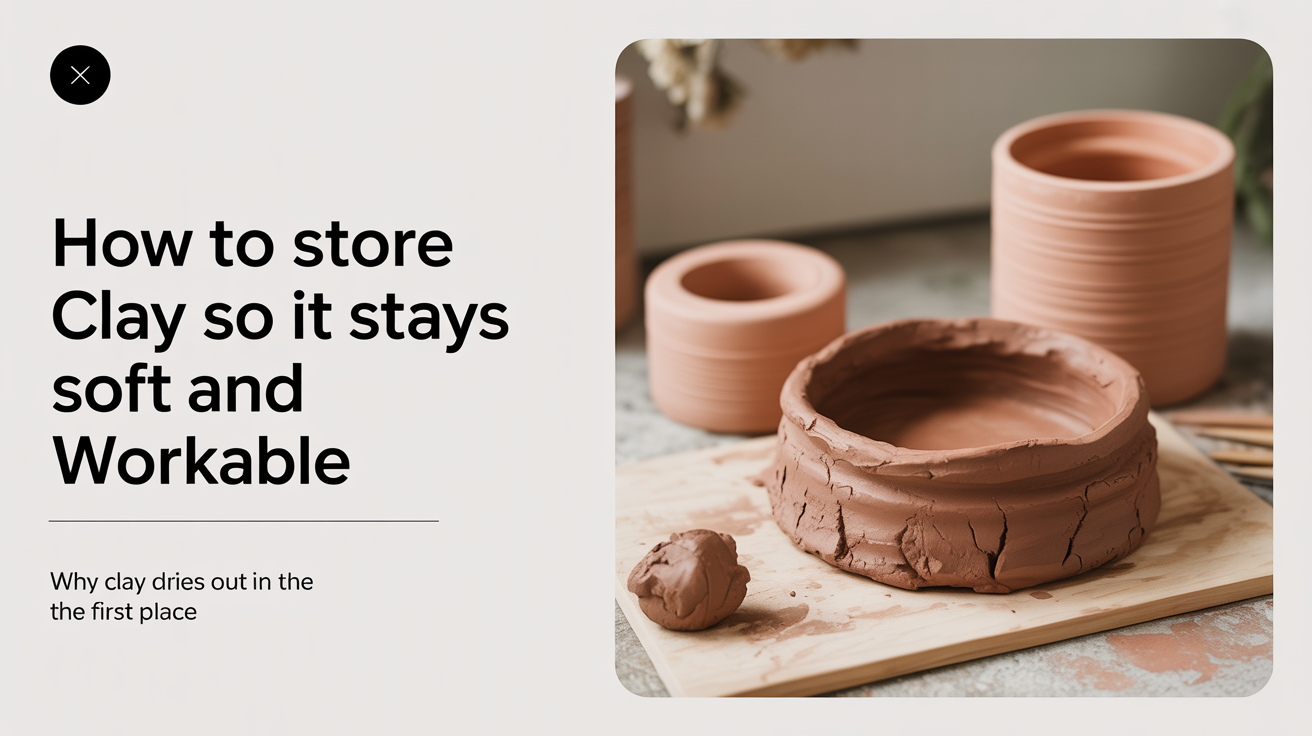
Clay is a mix of minerals and water. The water is what makes it plastic, meaning it bends and stretches without tearing apart. That plastic behavior is not just a loose description; it comes from the shape of the clay particles themselves. Clay particles are flat, and their faces and edges carry opposite electrical charges, which gives them a strong affinity for water. The water film between particles acts as both glue and lubricant, letting the particles slide past each other under pressure without springing back or fracturing, a mechanism Digitalfire's plasticity reference breaks down in more technical detail. When that water evaporates, the clay body stiffens and eventually becomes bone dry. At bone dry it is fragile and unusable for throwing or hand-building until you reconstitute it from scratch, which takes days and effort you could spend making things.
Evaporation speeds up with heat, low humidity, and airflow. A studio with a fan running, or a warm corner near a kiln, will pull moisture out of clay faster than a cool, still room. Exposed surface area matters too. A ball of clay loses moisture slower than a flat slab of the same weight because there is less surface for air to reach.
Understanding that gives you the strategy: minimize surface area, minimize air contact, and control temperature.
Storing Fresh Bagged Clay
Clay from a supplier usually comes in a sealed plastic bag inside a cardboard box. The bag is your best friend. Do not throw it away.
The most reliable storage method for a fresh, unopened bag is simply leaving it in that bag, in its box, away from heat. Stacked on a shelf or in a covered bin works fine. The original packaging is airtight enough to last months.
Once you open a bag, though, the clock starts. Here is what to do:
- Double-bag immediately. After taking what you need, press out the air from the original bag, twist it closed, then place that bag inside a second heavy-gauge plastic bag (the kind sold for storing clay, or a clean contractor bag). Seal the outer bag with a twist tie or rubber band.
- Use a lidded bin. Place the sealed bags in a plastic storage bin with a tight lid. A rubber-seal bin is ideal. Add a damp sponge or two damp rags inside the bin, not touching the clay directly, to keep the ambient moisture high.
- Keep it off the floor. Concrete floors are cold and can introduce moisture unevenly. A shelf or pallet keeps storage consistent.
Some potters skip the bin and just rely on double-bagging. That works, but a sealed bin adds a second layer of protection, especially in dry climates or heated studios.
One more thing worth knowing: clay improves with age. A bag that has sat sealed for several months often throws more smoothly than fresh clay. The aging process, called souring, allows bacteria to break down some of the organic material in the clay body, which improves plasticity. Aged clay is not spoiled clay. It is better clay. If you throw regularly, it is worth keeping one bag in active rotation and one bag simply resting, sealed, for a few months, so you always have a batch of well-aged clay on hand.
Reviving Clay That Is Firming Up
Sometimes you open a bag and the clay has stiffened more than you expected, maybe it sat in a warm spot, or the bag developed a small puncture. It is still workable, it just needs moisture put back.
For slightly firm clay:
- Poke and mist. Use a chopstick or dowel to poke several holes into the clay block, about halfway through. Fill those holes with water, then reseal the bag and leave it overnight. The water migrates through the clay body gradually.
- Damp cloth method. Wrap the clay block in a wet cloth, seal it in a bag, and check it after 24 hours. The cloth keeps the surface moist without introducing so much water that you end up with slip on the outside.
For clay that has gotten quite stiff but is not yet bone dry:
- Slice it into thin slabs, about half an inch thick.
- Stack the slabs with wet cloth between each layer.
- Bag the whole stack, press out air, and seal.
- Give it 48 to 72 hours. Wedge it well before using.
Bone dry clay requires full reclaiming: breaking it into small pieces, submerging in water to slake down, then drying on plaster bats to the right consistency. That process works, but it takes several days. Prevention is much simpler.
How Much Water Is Too Much
A common beginner mistake runs the other direction: adding so much water while reviving clay that it turns to slip rather than firming back up to a workable body. Use this as a rough guide before you start pouring.
| Clay condition | What it feels like | Fix |
|---|---|---|
| Slightly firm | Stiff but still dents under thumb pressure | Poke, mist, reseal overnight |
| Noticeably stiff | Resists thumb pressure, hard to wedge | Slab-and-cloth method, 48 to 72 hours |
| Crumbly, powdery edges | Approaching bone dry | Full slake-down reclaim, several days |
| Sticky, slumping | Over-wetted, holds no shape | Wedge on a plaster bat or dry canvas to pull moisture back out |
| Bone dry | Will not dent, may crack when pressed | Break up, submerge, slake, dry to working consistency |
If you are unsure which category your clay falls into, err on the side of adding less water than you think you need. It is far easier to mist a block again in an hour than to fix clay that has gone soupy.
Storing Work in Progress
Pieces you are actively building present a different storage problem. You need them to stay soft enough to continue working, but not so wet they collapse.
Freshly thrown or hand-built pieces should be covered with light plastic, ideally a thin sheet rather than a heavy bag pressed against the surface. Tuck the plastic under the bat or board edges so air does not sneak in from below. If you are not coming back to the piece for several days, mist the inside lightly before covering.
Pieces approaching leather hard are easier to manage. Leather hard is a specific, useful stage: the clay is firm enough to hold its shape and be handled without deforming, but still damp enough to trim, carve, or attach handles. Digitalfire's definition of leather hard notes that pieces at this stage can still be squeezed gently back into round if they have gone slightly out of shape, which is one reason potters like to trim and finish work right at this window rather than earlier or later. To hold a piece at leather hard:
- Cover loosely with plastic. A little air circulation is fine at this stage; you do not want it to dry further but you also do not want condensation pooling inside.
- A damp box works well here. A damp box is a lidded container lined with plaster or a layer of damp sand. It maintains a stable, humid microclimate. Pieces stored in a damp box stay at leather hard for days, sometimes longer, depending on the ambient humidity.
If a piece accidentally dries past leather hard before you finish, do not wet it all at once. Mist just the area you need to work (to reattach a cracked handle, for example), cover that spot with a damp cloth, wait an hour, and proceed carefully. This is also why slip and engobe decoration are traditionally applied right at leather hard rather than earlier or later: the decoration and the piece beneath it are still shrinking together at that stage, so they finish drying at roughly the same rate and the slip does not flake off.
Clay State Storage Reference
| Clay State | How to Store | How Long It Lasts |
|---|---|---|
| Unopened bagged clay | Original bag in lidded bin, away from heat | 6 to 12 months or longer |
| Opened, unused clay | Double-bagged, sealed bin with damp sponge | Several weeks to months |
| Slightly firm clay | Poke holes, add water, reseal overnight | Ready in 12 to 24 hours |
| Freshly thrown piece | Light plastic cover, minimal air contact | 1 to 3 days before leather hard |
| Leather-hard piece | Loose plastic or damp box | Days to a week |
| Bone dry piece | Store dry; reclaim by slaking in water | Indefinite (dry storage) |
Does Mold Mean the Clay Is Ruined?
No. Mold on stored clay looks alarming but it is not a problem for functionality. The same souring process that improves plasticity in aged clay can produce surface mold when conditions are damp. The mold does not penetrate deep into the clay body; it lives on the surface.
To deal with it:
- Scrape or cut off the surface layer.
- Wedge the clay thoroughly before use. Wedging redistributes the moisture and breaks up any surface colonies.
- If the smell bothers you, the mold dissipates after bisque firing.
To reduce mold in the first place, avoid adding so much water to your storage bins that puddles form. Damp, not wet, is the goal. A sponge that is moist to the touch rather than soaking handles this well.
Temperature and Where to Keep Clay
Heat is the enemy of stored clay. A studio that climbs above 80 or 85 degrees Fahrenheit in summer will dry out clay noticeably faster, even sealed. If your studio gets hot, consider storing clay in a cooler interior room, a basement, or a closet with more stable temperatures.
Freezing is a different kind of damage. If clay freezes and thaws repeatedly, the ice crystals disrupt the clay body structure. Clay that has been frozen once often becomes crumbly and loses plasticity. Porcelain is especially sensitive. Keep clay above freezing year-round. An unheated garage in a cold climate is not a safe storage spot from November through March.
The ideal storage temperature is somewhere between 50 and 75 degrees Fahrenheit. Cool, stable, and away from direct sunlight or heat sources. If you only have unheated storage available in a cold-winter region, plan to move your working clay supply indoors before the first hard frost rather than trying to revive frozen clay after the fact.
If you are just starting out and choosing what type of clay to buy first, storage habits matter more with some bodies than others. Porcelain dries faster and is more sensitive to temperature swings than a grogged stoneware. If you are curious about how different clay bodies compare, the earthenware, stoneware, and porcelain breakdown is a good place to understand the differences. And if you want to understand why some clays are grittier and how that affects workability, the piece on what grog is and when you want it covers that in detail.
Frequently Asked Questions
How long does an opened bag of pottery clay stay workable?
Properly sealed and stored in a cool spot, opened clay stays soft for weeks to months. The key variables are how airtight your seal is and the temperature of your storage area. Double-bagging and keeping clay in a lidded bin with a damp sponge gives you the best results. Without those precautions, an opened bag can stiffen in a week or two.
Can I use a regular plastic storage bin to store clay?
Yes, as long as it has a lid that closes firmly. Rubber-seal bins (the kind used for food storage on a large scale, or hardware bins with gaskets) are ideal, but any bin with a reasonably tight lid works. The bin adds a layer of protection beyond the bag itself and helps keep ambient humidity stable if you add a damp cloth or sponge inside.
My clay has mold on it. Is it safe to use?
Surface mold is normal with stored clay, particularly in humid conditions. It does not ruin the clay. Scrape the affected surface, wedge thoroughly, and proceed. The mold burns off completely during bisque firing, so it has no effect on the finished piece. If mold is recurring, reduce the moisture inside your bin slightly so conditions are damp rather than wet.
What is the best way to keep clay from drying out between studio sessions?
Cover any pieces in progress with light plastic, tucked in around the edges to block airflow. For clay you are not actively using, double-bag it and seal it in a lidded bin. If you work irregularly, adding a damp sponge to the bin gives you extra insurance without over-wetting the clay. The goal is stable, sealed moisture, not saturation.
Is old clay still good to use?
Often better than fresh. Clay that has been sealed and stored for months develops better plasticity through the aging process. It throws more smoothly and responds to pressure more predictably. The main thing to check is that it has not dried unevenly. If the outside feels stiffer than the interior, wedge it well to redistribute moisture before throwing.
Can I store different clay bodies in the same bin?
You can, as long as each one stays in its own sealed bag with a label. Never let two different clay bodies touch directly in storage, especially a porcelain and a heavily grogged stoneware, because any stray scrap that ends up in the wrong bag can introduce contamination that shows up as a fired defect later. Label bags with the clay body name and the date opened so you can track how long each has been aging.
How do I store clay long term if I am pausing pottery for a season?
For storage longer than a few months, double-bag as usual but check the bags every four to six weeks rather than assuming they are fine. A small puncture or a loosened seal can go unnoticed for a long time in storage that nobody is actively using. If you know you will be away for an extended period, a sealed bin in a stable, cool interior space is safer than a studio shelf that may see seasonal temperature swings.