Clay & Materials
Types of Clay for Pottery: Earthenware, Stoneware, and Porcelain Explained
Learn the types of clay for pottery: earthenware, stoneware, and porcelain compared by firing temp, strength, and beginner-friendliness.
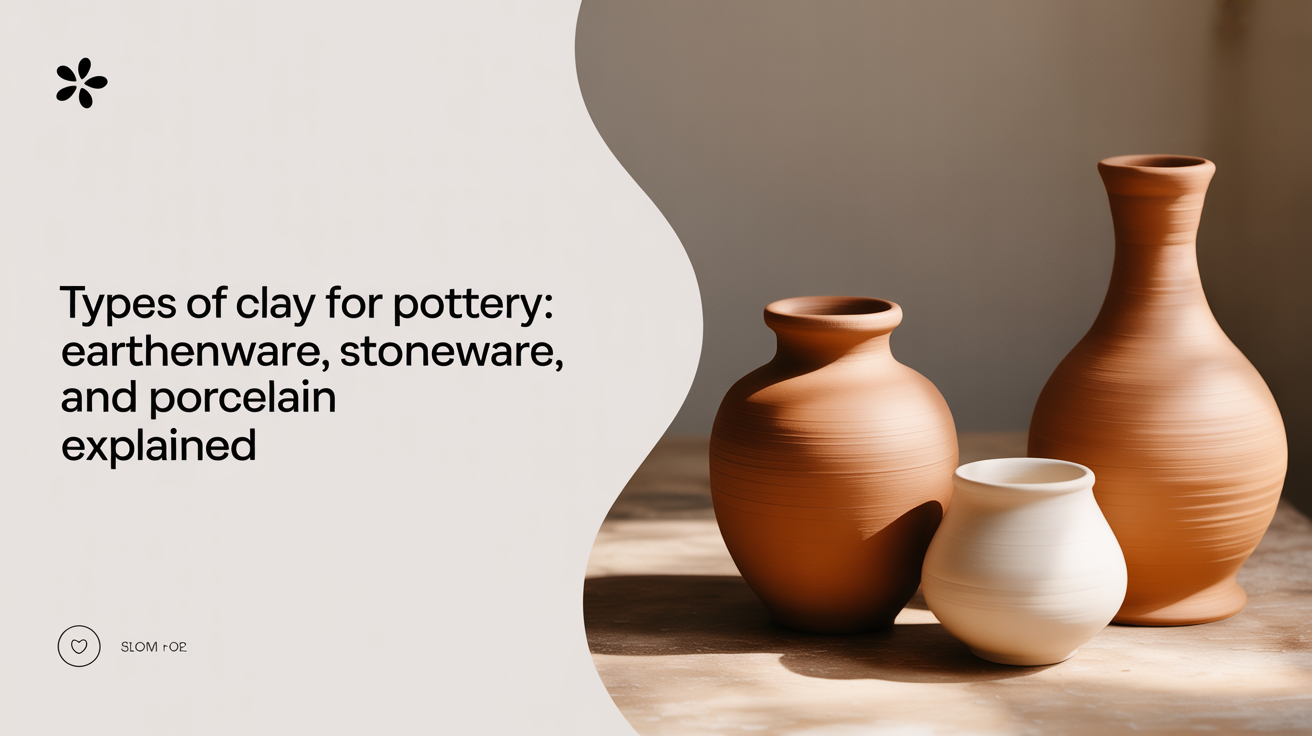
If you're standing in front of a wall of clay bags at a ceramics supplier, the sheer number of options can stop you cold. The good news: most pottery clay types fall into three main families, earthenware, stoneware, and porcelain, and once you understand what makes each one tick, choosing the right bag becomes a lot less stressful. This guide breaks down the differences in plain terms so you can get back to the actual making.
What Makes Different Clay Bodies Different
Clay is basically decomposed rock, mostly feldspar and other silicate minerals that have broken down over millions of years. The particle size, mineral content, and organic matter in a given deposit give it particular working qualities and determine how it behaves in the kiln.
When potters talk about a "clay body," they mean a blend formulated for specific results. Commercial clay bodies are rarely straight dug clay; they're mixtures adjusted for plasticity, texture, fired color, and shrinkage. The three major categories reflect broad differences in raw materials and firing range.
A quick note on temperature: potters use "cone" ratings as a shorthand for kiln temperature. Lower cone numbers mean lower temperatures. Understanding cone temperatures in pottery is worth a proper read before you commit to a clay body, because your clay and your glazes need to match.
Earthenware: The Original Pottery Clay
Earthenware is the oldest ceramic material humans ever fired. Terra cotta flower pots, Roman amphorae, Mexican talavera, and countless folk pottery traditions around the world all rely on it. The clay fires at relatively low temperatures, cone 06 to cone 1 (roughly 1828°F to 2109°F / 998°C to 1154°C), and it stays porous unless glazed.
Working Qualities
Earthenware is typically plastic and forgiving. The particles are large enough that the clay moves easily under your hands, making it popular for hand-building and a solid choice for beginners who are still developing feel for the material. It has reasonable plasticity and holds its shape during construction without being fussy.
The tradeoff is porosity. Fired earthenware is not vitrified, meaning it still absorbs water. Unglazed terra cotta pots left outdoors in freezing weather will eventually crack as absorbed moisture expands. For functional ware meant to hold liquids, a well-fitted glaze is not optional.
Fired Color
Most earthenware fires to a warm red, orange, or buff tone depending on iron content. The iron that gives terra cotta its characteristic color also limits how bright your glazes can look. White or pastel slips and glazes over red earthenware often look muddier than the same glaze over a lighter clay.
Stoneware: The Workhorse of the Studio
Stoneware is what most working potters reach for by default. It fires at mid to high temperatures, cone 4 to cone 10 (around 2167°F to 2381°F / 1186°C to 1305°C), and becomes genuinely vitrified at the upper end of that range. Vitrification means the clay particles partially melt and fuse together, creating a dense, waterproof, chip-resistant body without any glaze at all.
For choosing your first clay as a beginner, a mid-fire stoneware at cone 6 is almost always the practical recommendation. It's durable enough for everyday dishes, fires in electric kilns (which are common in shared studios), and is far more forgiving than porcelain.
Working Qualities
Stoneware is plastic and sturdy. It tolerates being pushed around, holds texture well, and shows a lot of personality in reduction or wood firing. Many commercial stoneware bodies include grog, which is pre-fired and crushed clay that adds texture and reduces shrinkage cracking. What grog is and when you want it matters more than it sounds, especially if you're hand-building large pieces.
High-fire stoneware (cone 9 to 10) is what you'll find in most wood-fire and soda-fire studios. The extra heat produces spectacular atmospheric effects and rock-solid functional ware.
Fired Color
Stoneware tends to fire gray, tan, brown, or warm buff depending on the iron content. Many potters love this neutral palette because it lets glazes read true and creates a natural, earthy aesthetic. If you want stark white or very clean pastel surfaces, stoneware is not your best tool.
Porcelain: The Refined Challenge
Porcelain is the prestige clay. It's pure white, fires to near-translucency at high temperatures, and produces the cleanest glaze surfaces of any pottery clay type. The price for all that beauty is difficulty. Porcelain has very fine particles, lower plasticity, and a narrow firing window.
Most porcelains fire at cone 6 to cone 10 (same range as stoneware), though low-fire porcelains do exist. The key difference from stoneware is the raw material: true porcelain is based on kaolin, a white-firing aluminum silicate clay that is less plastic than the iron-bearing clays in most stoneware.
Working Qualities
Porcelain is less forgiving at every stage. On the wheel it has a tendency to go off-center or collapse with less warning than stoneware. Hand-built porcelain cracks more readily during drying if not carefully managed. It also has higher shrinkage, typically 12 to 15 percent from wet to fired, compared to 10 to 12 percent for many stoneware bodies.
That said, potters who love porcelain are devoted to it precisely because of the discipline it requires. The material rewards patience and precision with surfaces that simply can't be replicated in other clay bodies.
Fired Color
Fired porcelain is white to near-white, sometimes with a faint warm or cool cast depending on the formula. Celadons, shinos, and other translucent glazes look completely different over porcelain than they do over dark stoneware. For delicate colored glazes and painted decoration, porcelain is unmatched.
Side-by-Side Comparison
Here's a quick reference for the three main pottery clay types:
| Clay Body | Firing Cone | Firing Temp (°F / °C) | Fired Color | Strength | Beginner-Friendly? |
|---|---|---|---|---|---|
| Earthenware | Cone 06 to 1 | 1828–2109°F / 998–1154°C | Red, orange, buff | Moderate (porous) | Yes |
| Stoneware | Cone 4 to 10 | 2167–2381°F / 1186–1305°C | Gray, tan, brown | High (vitrified) | Yes (best choice) |
| Porcelain | Cone 6 to 10 | 2232–2381°F / 1222–1305°C | White to off-white | Very high | Challenging |
How to Choose for Your Situation
A few practical questions narrow this down quickly:
- What kiln do you have access to? Electric kilns in community studios almost always fire to cone 6. That rules in both stoneware and mid-fire porcelain, and rules out most high-fire stoneware.
- Are you making functional ware? For mugs, bowls, and plates, stoneware is the reliable choice. Earthenware needs a well-fitted glaze to be food-safe. Porcelain is excellent for functional work once you have the skill to avoid cracks.
- Are you hand-building or throwing? Hand-builders often appreciate earthenware's plasticity and the way it holds texture. Beginner throwers do best with a grogged stoneware that won't collapse on the wheel.
- Do you care about fired color? If you want white surfaces and clear glaze colors, you'll be fighting stoneware the whole time. A white stoneware or porcelain makes more sense.
Most potters spend their early years in stoneware, move into porcelain when they're ready for the challenge, and keep a bag of earthenware around for specific projects like terra cotta planters or low-fire majolica work.
Frequently Asked Questions
What is the easiest clay for beginners?
A mid-fire stoneware at cone 6 is the most forgiving starting point. It's plastic enough to work easily, sturdy enough to survive the learning curve, fires in common electric kilns, and takes most commercial glazes without trouble. A body with a small amount of grog adds a bit of texture that helps you feel the clay move under your hands.
Can you mix earthenware and stoneware together?
You can blend clays, but only within the same firing range. Earthenware and stoneware fire at very different temperatures, so mixing them produces a body with unpredictable behavior and likely cracking. If you want to adjust a clay's working properties, stick to materials designed for the same cone range.
Is porcelain actually harder to throw than stoneware?
Yes, noticeably so. Porcelain is less plastic, which means it has less memory and less resistance when you push into it. Walls thin out and collapse faster, and centering requires a lighter, more consistent touch. Most instructors recommend getting comfortable on a forgiving stoneware body before switching to porcelain.
Does the type of clay affect food safety?
The clay body matters less than the glaze and the firing. Any properly fired, vitrified clay body (stoneware or porcelain at appropriate cone) that's glazed with a food-safe glaze is safe for daily use. Earthenware is the one exception: it needs a well-fitted, properly fired glaze with no crazing (fine cracks in the glaze surface) to be reliably food-safe, since porous clay can harbor bacteria.
What does "cone 6" actually mean?
Cone numbers correspond to specific firing temperatures. Cone 6 is approximately 2232°F (1222°C), and it's the most common firing temperature in small studios and community kilns with electric kilns. The cone system accounts for the fact that kiln behavior depends on both temperature and how fast you reach it, making it more accurate than quoting a single temperature number.