Clay & Materials
What Clay Should a Beginner Buy First?
Choosing the best clay for beginners doesn't have to be complicated. Learn which clay body matches your firing method, hand-building style, and budget.
The best clay for beginners is a smooth to lightly grogged mid-fire stoneware, typically rated for cone 5 or 6. It's forgiving on the wheel, durable enough for hand-building, and fires to a strong, functional result in a wide range of electric kilns. If you're just getting started, this is the type to reach for first.
That said, "best" depends on what you have access to. Your firing method matters more than almost anything else, so let's work through the choices in a practical order.
Match Your Clay to Your Firing Method First
Before you look at texture, color, or price, figure out how your clay will be fired. Clay bodies are formulated for specific temperature ranges, and using the wrong one can mean cracks, bloating, or pieces that don't survive the kiln.
Electric Kilns (Cone 5/6 Oxidation)
Most community studios and home studio setups use electric kilns firing to cone 5 or 6 in oxidation. A mid-fire stoneware designed for this range is the easiest starting point. It's widely available, well-tested, and the kiln schedules for it are thoroughly documented. If you're taking a class and the studio has an electric kiln, ask what cone it fires to, then buy clay rated for that cone.
Gas or Wood Kilns (Cone 10 Reduction)
High-fire reduction is less common for beginners because access to the right kiln is harder. If your studio fires to cone 10, you'll need a clay body rated for that temperature. Many high-fire stonewares are beautifully toothy and rich in color after reduction, but they're not more beginner-friendly than mid-fire. Use whatever cone matches the kiln.
Low-Fire Earthenware (Cone 04 to Cone 06)
Earthenware fires at lower temperatures, which makes it accessible for small home kilns and raku work. It stays more porous than stoneware even after firing, which means functional pieces need a properly fitted glaze to hold water. It's a fine starting point if earthenware is what your studio uses, but it's not the default recommendation for a brand-new buyer choosing without constraints.
For a deeper look at how these three clay families differ in composition and behavior, see this guide to types of clay for pottery: earthenware, stoneware, and porcelain explained.
Why Stoneware Is the Most Forgiving Beginner Clay Body
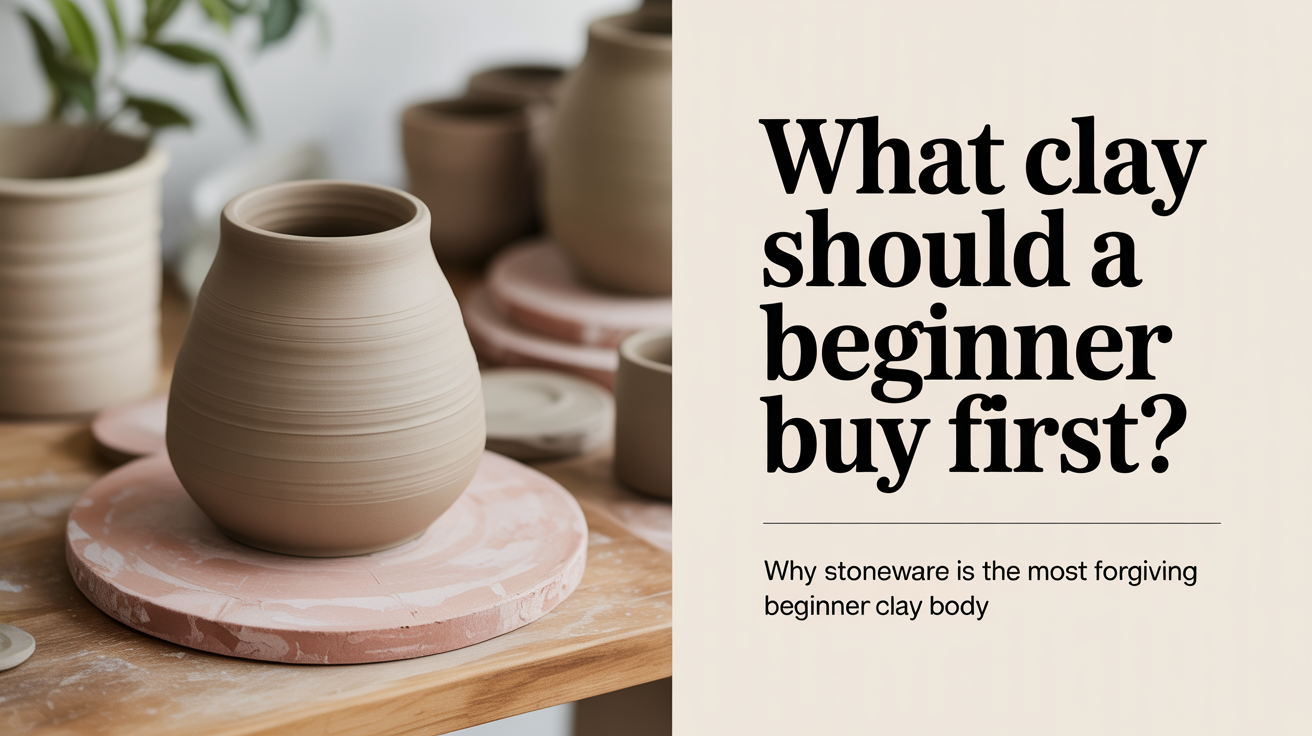
Stoneware sits in the middle of the clay spectrum in almost every way that matters for learning. It has enough plasticity to center on the wheel without fighting you, enough structure to hold its shape during hand-building, and enough margin for error that minor inconsistencies in wall thickness don't doom a piece in the kiln.
Porcelain is beautiful, but it's much less forgiving. It cracks more easily during drying if your walls aren't even, it's harder to center for beginners because it's so smooth and dense, and it shows every fingerprint and tool mark. Most experienced potters suggest learning on stoneware first, then moving to porcelain once you have a feel for the medium.
A good beginner clay body has plasticity (it bends without cracking), enough tooth to grip your hands on the wheel, and a cone rating that matches your kiln. Stoneware hits all three.
Grog: How Much Texture Does Your Project Need?
Grog is ground, fired clay mixed into a clay body to reduce shrinkage and add texture. The amount of grog in a clay body changes how it feels to work with and what it's best suited for.
If you're not sure what grog is or why it's in your clay, this primer on what grog is in clay and when you want it covers it thoroughly.
Hand-Building: More Grog Helps
For slab work, coil building, and sculpture, a moderately grogged clay (anywhere from fine to medium grog, 10% to 25%) is your friend. The grog stabilizes the clay as it dries, reduces cracking, and gives large flat slabs the structure to hold their shape. A heavily grogged sculptural clay can have sharp particles that make surface work scratchy, so medium is usually the sweet spot for functional hand-built pieces.
Wheel Throwing: Less Grog, Smoother Body
On the wheel, you're in constant contact with the clay through your palms and fingertips. A heavily grogged body will scratch your hands during long throwing sessions and make it harder to compress and thin the walls. Look for a smooth throwing body with little to no grog, or fine-grit grog at most. Many suppliers label these specifically as "throwing bodies" or "smooth stonewares."
Both: A Fine-Grog All-Purpose Clay
If you're doing a mix of wheel work and hand-building, a clay with fine grog (roughly the texture of coarse sand) is a reasonable compromise. It won't sand your hands raw on the wheel, and it's stable enough for modest slab projects.
Clay Color: Buff, White, or Dark?
Clay color affects the final look of your glazed and unglazed work, but it's lower priority than cone rating and grog level when you're buying your first bag.
A buff stoneware (warm beige when fired) is the standard beginner choice because glazes read true on it and it's easy to see your tool marks during trimming. White stoneware gives a brighter base for colored glazes. Dark stonewares and iron-rich clays can produce beautiful matte surfaces, especially in reduction, but they fire gray or brown and can make it harder to judge glaze results when you're still learning.
Start with buff or white stoneware. You can experiment with darker bodies once you understand how your glazes behave.
Clay Characteristics at a Glance
| Characteristic | What to Look For as a Beginner |
|---|---|
| Cone rating | Match exactly to your kiln (cone 5/6 for most electric kilns) |
| Plasticity | High plasticity; "short" clay cracks when bent |
| Grog level | Smooth to fine for wheel; fine to medium for hand-building |
| Color (fired) | Buff or white for easiest glaze color reading |
| Shrinkage rate | 10–12% is typical; higher rates need more drying care |
| Clay body type | Stoneware for most beginners; earthenware if kiln requires it |
How Much Clay to Buy First
A 25 lb (roughly 11 kg) box is the standard starting purchase for a new potter. It's enough to make several pieces, make mistakes, and still have clay left over to practice centering. It's also a manageable weight to work through before it dries out in storage.
If you're taking a class that provides clay, you may not need to buy any at first. Once you know you like the medium, a 25 lb box lets you practice at home between sessions. At that point, buy the same type your studio uses so your pieces can go into the same kiln load.
Resist buying a 50 lb box on your first order. Clay dries out over months if it's not kept in an airtight bag or container, and there's a chance you'll want a different clay body once you've tried a few projects.
Beginner Clay Buying Checklist
Before you click "add to cart," run through these:
- Cone rating matches your studio or home kiln (ask before you buy)
- Clay type is stoneware (unless the studio uses earthenware)
- Grog level fits your main technique (smooth for wheel, fine-medium for hand-building)
- Color is buff or white for your first bag
- Quantity is 25 lb to start
- Clay is labeled as "moist" or "ready to use," not "dry clay powder" (a different product)
- You have an airtight plastic bag or lidded bin to store the unused portion
Understanding cone temperatures in pottery, from cone 04 to cone 10, will help you confirm you're reading the cone rating on the bag correctly before you buy.
Frequently Asked Questions
Can I use air-dry clay instead of kiln-fired clay?
Air-dry clay is a different product entirely. It doesn't need a kiln and it's widely available in craft stores, but it's fragile, porous, and not food-safe. It's fine for decorative sculpture projects, but it won't make functional pottery that holds water. If you want to make mugs, bowls, or vases that actually work, you need kiln-fire clay and access to a kiln.
Is porcelain good for beginners?
Most experienced potters suggest starting with stoneware rather than porcelain. Porcelain has less "memory" when you're centering on the wheel, cracks more easily during uneven drying, and shows every handling mark. It rewards precision that takes time to develop. Once you can throw consistent walls and trim cleanly, porcelain is an excellent next step.
What happens if I use the wrong cone clay in my kiln?
Underfiring (running a cone 10 clay in a cone 6 kiln) leaves the clay porous, weak, and often a different color than expected. Overfiring (cone 04 earthenware in a cone 6 kiln) can cause the clay to bloat, warp, or melt onto your kiln shelf. Always match your clay's cone rating to your kiln's firing temperature.
How long does moist clay last in storage?
Properly sealed moist clay stays workable for months, sometimes over a year. Keep it in the original bag, squeeze out as much air as possible, and store it somewhere cool. If it starts to dry at the edges, add a small amount of water, reseal the bag, and let it redistribute for a day or two. Dried-out clay can be reclaimed (slaked down in water and dried to workable consistency), but it's extra work you can avoid with good storage habits.
Do I need different clay for hand-building and wheel throwing?
You can use the same clay for both, especially if you choose a fine-grog or smooth all-purpose stoneware. If hand-building becomes your main focus, a clay with slightly more grog will help with stability. If you're primarily on the wheel, a smooth throwing body will be more comfortable. Most beginners start with one clay body and switch once they know which technique they prefer.