Firing & Kilns
How to Dry Pottery Before Firing So It Doesn't Crack
Learn how to dry pottery before firing without cracks. Covers clay drying stages, slowing drying down, bone dry tests, and why rushing always backfires.
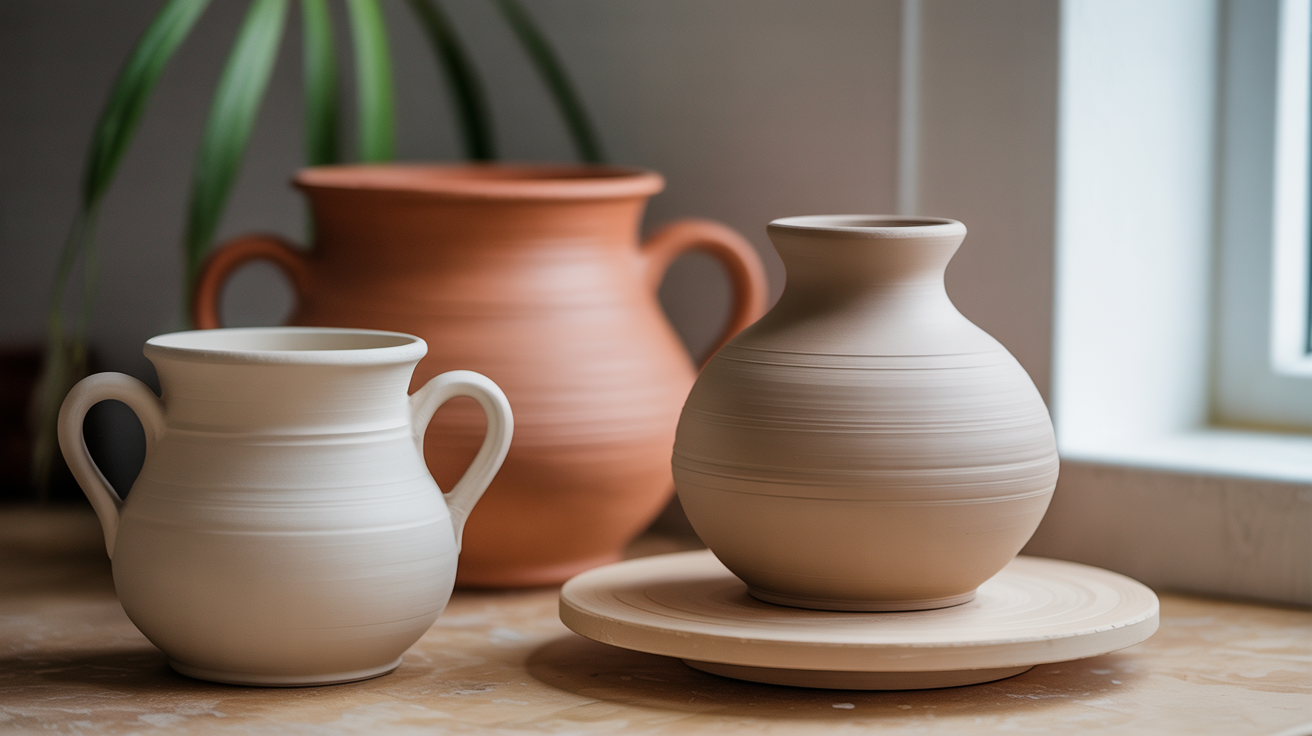
The single rule that saves most beginner pots: dry slowly and evenly, all the way to bone dry, before anything goes near a kiln. Steam trapped inside wet clay expands violently at firing temperatures, and that expansion has nowhere to go except through the wall of your pot. Patience during drying is genuinely the cheapest fix in pottery.
The Three Stages of Clay as It Dries
Understanding what clay is doing as it loses moisture helps you make better decisions at every stage. Clay passes through three distinct states before it is ready to fire.
| Stage | Look and Feel | What You Can Do |
|---|---|---|
| Plastic | Soft, shiny, bends without cracking | Throw, hand-build, attach pieces, pull walls |
| Leather-hard | Matte surface, firm but cool to the touch, slight give when pressed | Trim, carve, attach handles, smooth joins |
| Bone dry | Pale, room temperature against your cheek, rigid and very fragile | Bisque fire, sand lightly, load the kiln |
Each stage matters. A handle attached to a bone-dry body will almost certainly crack at the join because the two pieces are no longer able to shrink together. Most attachments need to happen at or before leather-hard.
Plastic Clay
Fresh off the wheel or just hand-built, plastic clay is pliable because it still holds most of its water. This is when you do the majority of your shaping work. The clay is heavy, cool, and usually a little shiny under a workroom light.
Leather-Hard Clay
Leather-hard is a generous window. The piece holds its shape but hasn't gone rigid yet. Trimming the foot ring, carving surface texture, and attaching handles or spouts all happen here. The clay feels cool, slightly damp, and firm, but it compresses a little if you push a thumbnail into it. This stage can last anywhere from a few hours to several days depending on humidity and how you store the piece.
Bone Dry Greenware
Bone dry means all the physical water has left the clay body. The piece will be noticeably lighter than at leather-hard, and it will feel room temperature, not cool, when you hold it against your cheek. That cheek test is one of the most reliable checks potters use because your face is sensitive to the slight chill that evaporating moisture creates. A piece that still feels cold is still damp.
Why Uneven or Fast Drying Causes Cracks
Clay shrinks as it dries. A typical stoneware body shrinks 5 to 10 percent from plastic to bone dry, and then another few percent during firing. The problem with fast drying is that the outside of a thick wall dries and shrinks before the inside does. That tension is what cracks pots.
The same issue shows up with uneven drying. If one side of a vase faces a window or an open door, that side loses moisture faster than the sheltered side. The faster-drying surface wants to shrink; the wetter side holds it back. Eventually something gives.
Rims and handles are especially vulnerable because they are thin and exposed. A rim left uncovered overnight in a dry studio can go from leather-hard to bone dry while the base is still plastic, and the mismatch in shrinkage rates opens cracks right where the wall meets the floor.
How to Slow Drying Down
Slowing drying is mostly about controlling airflow and covering the right parts of a piece at the right times.
Loose plastic sheeting is the standard approach. Drape a piece of thin poly film loosely over your pot rather than sealing it tight. A sealed bag traps condensation and can make clay too wet in spots. Loose coverage slows moisture loss without creating puddles.
Cover the fast-drying parts first. Rims, handles, and spouts dry faster than thick bases. Wrap a strip of plastic around just the rim while leaving the base more exposed, then gradually reduce coverage over a few days until the whole piece is drying evenly.
Flip pieces upside down once they reach firm leather-hard. Bowls and open forms lose moisture from the rim much faster than from the base, which is sitting on the shelf. Flipping them puts the drier rim on a surface and lets the base catch up.
Avoid direct airflow. A fan pointed at greenware, or a pot sitting near a heating vent, dramatically accelerates surface drying. Studio AC is a real culprit in summer. If your studio is air-conditioned, drying greenware on a lower shelf away from vents, or inside a cabinet, makes a measurable difference.
Tips for consistent results:
- Rotate pieces a quarter turn each day so no single face dries faster
- Set pots on a piece of thin foam or a soft cloth rather than directly on a plaster bat, which can pull moisture from the base unevenly
- In very dry climates, mist the inside of a tent of plastic without touching the clay itself
- During hot dry spells, 7 to 10 days of covered drying before uncovering for the final bone-dry stage is not excessive for anything thicker than a pinch pot
- Keep greenware away from sunlight, which dries surfaces extremely fast
Drying Thick Pieces, Sculptural Work, and Attachments
Thick pieces need more time, full stop. A thick slab planter or a solid sculptural figure might need two to three weeks of careful, staged drying before it is safe to fire. The risk is a concept potters call differential drying: the outer surface is bone dry and starting to harden while the interior is still plastic, creating a layer of tension through the wall.
For anything with significant variation in wall thickness, like a mug with a thick base and pulled walls, try to equalize the drying rate by covering thinner sections while the thicker base catches up.
Attachments are their own category of challenge. Handles, feet, and sculptural additions need to be joined when both pieces are at the same stage of dryness, ideally leather-hard to leather-hard. Score both surfaces, apply a thin layer of slip made from the same clay body, press firmly, and smooth the join. A handle that is attached wetter than the body will shrink more and pull away. A handle attached drier than the body won't bond properly at all.
After attaching, wrap the join area in a small strip of plastic for a day or two to let moisture equalize across the attachment before you continue drying the whole piece.
How to Know Your Pottery Is Bone Dry
The cheek test is the most practical field check. Hold the piece against your cheekbone or the back of your hand. If it feels cool or cold, evaporating moisture is still chilling the surface. If it feels the same temperature as the air in the room, you are close to bone dry. Wait another day and test again before loading the kiln.
Color is another reliable cue. Most clay bodies shift from a darker, earthier tone when wet to a noticeably paler, chalky appearance when bone dry. Porcelain goes from pale gray to almost white. Terracotta lightens from a deep orange-red to a dusty, dusty brick. If you see any darker patches on the surface, those areas are still holding moisture.
Weight matters too. Pick the piece up. Bone dry pottery is surprisingly light. If it still feels dense and heavy relative to its size, it needs more time.
One practical habit: leave pieces for a full day after you think they are bone dry, especially if the studio was humid or if the piece is large. That extra day costs nothing and eliminates a common point of failure.
Why Bone Dry Matters Before the Kiln
Water in clay exists in two forms. Physical water, which fills the spaces between clay particles, leaves during drying. Chemical water, which is bound into the clay minerals themselves, only leaves during firing, around 573 degrees Celsius (1063 degrees Fahrenheit). But if physical water is still present when you fire, it converts to steam well before the clay body gets strong enough to handle the pressure. That steam blows out walls, shatters bases, and occasionally damages other pieces in the kiln.
This is why potters fire a bisque, a lower-temperature initial firing, before glaze firing. Bisque firing drives off the remaining chemical water and turns fragile greenware into a porous, stable ceramic that can handle glaze without falling apart. You can read more about what happens during that step in this guide to bisque firing vs glaze firing and what each one does.
If you are firing in an electric kiln, most controllers include a preheat or candling stage that holds at a low temperature, around 80 to 100 degrees Celsius, for several hours before ramping up. This extra time lets any remaining moisture escape gently. It is a useful safety net, but it is not a substitute for proper drying. Relying on the preheat to dry out a piece that is still plastic is how you ruin a kiln load. For more on what kilns actually do during a firing cycle, this beginner's guide to how a pottery kiln works covers it clearly.
And if you are at a stage where firing isn't available to you yet, there are still useful options. This piece on what to do if you don't have a kiln covers some practical alternatives worth knowing about.
Frequently Asked Questions
How long does it take for pottery to dry before firing?
It depends on the piece's thickness, the humidity in your studio, and how much airflow there is. Thin-walled mugs and bowls in a temperate climate might reach bone dry in 3 to 5 days with loose plastic coverage for the first day or two. Thick planters or sculptural pieces often need 2 to 3 weeks of staged drying. When in doubt, leave it longer. There is no real downside to over-drying, but the downside to under-drying is a cracked or exploded piece.
Can I speed up drying pottery in the oven?
Technically yes, but it requires care. A conventional oven set to its lowest temperature, around 90 to 110 degrees Celsius (200 to 225 degrees Fahrenheit), can gently warm pottery toward bone dry. Leave the oven door slightly ajar to let moisture escape, and do not put freshly made pieces straight into a hot oven. Start at room temperature and warm gradually. Even then, this method is best reserved for small, even-walled pieces. Thick or attachment-heavy work risks uneven drying and cracking.
Why do my handles keep cracking off during drying?
The most common cause is a mismatch in moisture content between the handle and the body at the time of attachment. If the handle is softer and wetter than the body, it will shrink more as it dries and pull away from the wall. Attach handles at leather-hard, score and slip the join thoroughly, and wrap the attachment point in plastic for 24 to 48 hours after joining. This lets both pieces equalize before the drying continues.
What does bone dry pottery feel like?
Bone dry pottery feels light, room temperature rather than cool, and quite brittle. It has no flexibility at all; bending a thin wall will snap it rather than flex it. The surface looks pale and chalky rather than shiny. The cheek test is the quickest check: if the piece feels the same temperature as your skin rather than cool against it, you are likely at or near bone dry.
Is it okay to fire pottery that isn't quite bone dry if I use a slow ramp?
A very slow kiln ramp with an extended low-temperature preheat can compensate for slight residual moisture, and many experienced potters use this approach. But it is not reliable for pieces that are still clearly damp or leather-hard. The risk of steam pressure cracking the piece, or of larger explosions damaging other work in the kiln, is real. Getting to genuine bone dry before loading is the habit that produces consistent results, especially while you are still learning.