Glazing & Decorating
Glossy, Matte, and Satin Glazes: What's the Difference?
Learn the difference between glossy, matte, and satin glaze finishes so you can choose the right type of pottery glaze for your next piece.
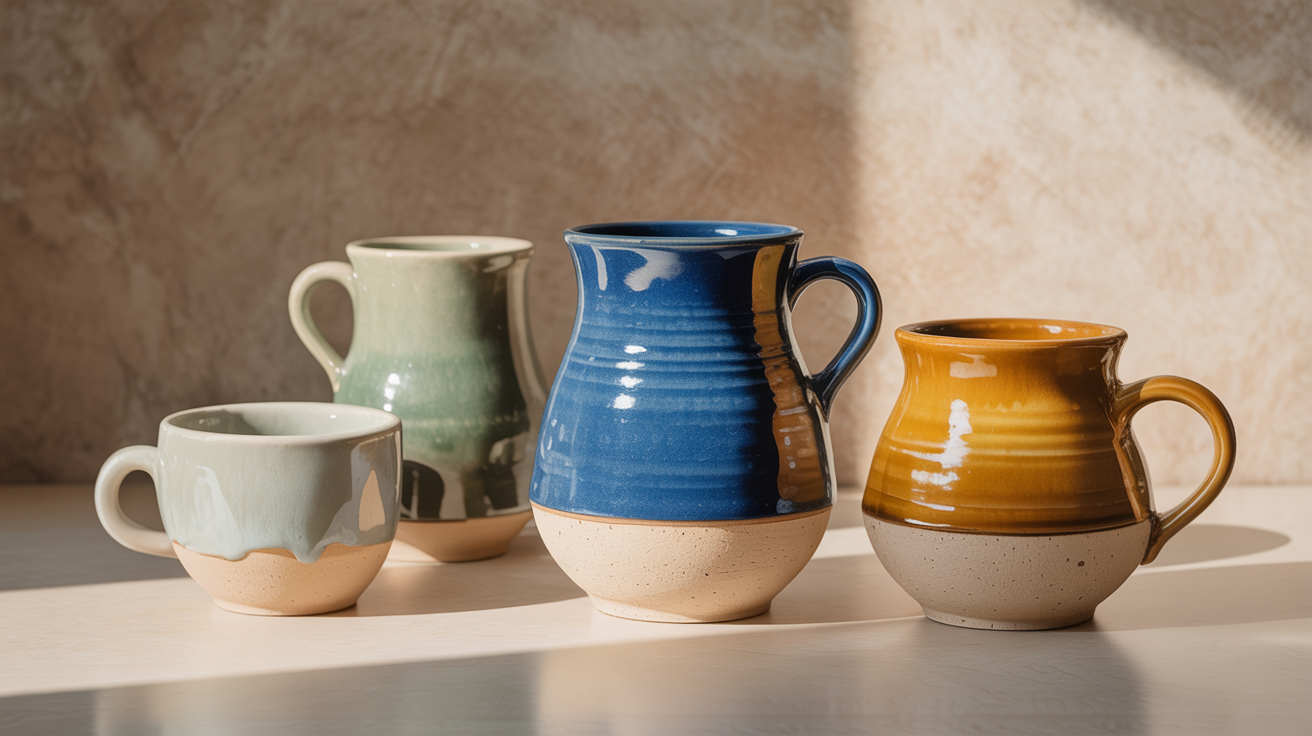
Walk into any pottery supply shop and you will find shelves of glaze labeled glossy, matte, or satin. The names sound self-explanatory, but once you start mixing them, layering them, or firing the same glaze at two different temperatures, things get confusing fast. This guide breaks down what each finish actually is, how the chemistry produces it, and how to pick the right one for the piece you are making.
At a Glance
- All three finishes are the same underlying material, a glass layer fused to the clay body. The difference is surface microstructure, not a different kind of glaze.
- Glossy comes from a smooth, fully melted glass surface with a high ratio of glass formers to alumina.
- Matte comes from micro-crystals that form as the glaze cools, which scatter light instead of reflecting it cleanly.
- Satin sits between the two: some crystal development, but not enough to fully break up the shine.
- Cooling rate changes the outcome. The same recipe can shift from glossy to satin to matte depending on how slowly the kiln cools.
- Barium-matted glazes need real caution in the studio and on food surfaces; zinc- or calcium-matted alternatives are the safer default for functional ware.
What Makes a Glaze Glossy, Matte, or Satin?
All three are versions of the same thing: a glass layer fused to clay during firing. The difference in surface quality comes down to how that glass layer cools and whether the surface stays smooth or develops a fine crystal structure that scatters light.
Glossy glazes cool into a completely smooth glass surface. Light hits it and bounces back in one direction, creating that mirror-like shine. The surface is physically flat at a microscopic level. Digitalfire's entry on glossy glaze frames this as largely a chemistry question: glazes rich in glass formers such as silica and boron trend glossy, while glazes with a lot of alumina relative to silica trend matte, and the ratio of the two is a reasonable general predictor of which way a recipe will go.
Matte glazes contain minerals (often calcium, barium, or zinc) that encourage tiny crystals to form as the glaze cools. Those micro-crystals roughen the surface and scatter light in many directions instead of reflecting it back cleanly. The result looks dry or chalky compared to glossy.
Satin glazes sit between the two. They have some crystal development but not enough to fully break up the reflection. You get a soft sheen rather than a bright shine or a flat dry look.
A key thing to understand: the same base glaze can shift between finishes depending on how thick you apply it and how slowly or quickly your kiln cools. If you slow-cool a glossy glaze, you may push it toward satin or even matte. Digitalfire's glossy glaze reference confirms this directly, noting that a fluid glaze "can crystallize to a matte surface if cooled slowly or a glossy surface if cooled quickly" even without changing the recipe at all. If you fire a matte at a higher cone than intended, the crystals may not form and you end up with a glossy result instead.
Comparing the Three Finishes at a Glance
| Finish | Surface feel | Light behavior | Food safe? | Notes |
|---|---|---|---|---|
| Glossy | Smooth, glassy | High reflection | Usually yes, when fired to maturity | Easy to clean, shows fingerprints |
| Matte | Slightly rough | Diffuse/scattered | Check per glaze, barium matte needs care | Can absorb stains; test before use on functional ware |
| Satin | Smooth but soft | Low/even sheen | Generally yes | Forgiving to apply; hides brush marks well |
A quick note on food safety: any glaze finish can be food safe if the right materials are used and the piece is fired to its rated cone. Barium carbonate, which appears in some matte glazes, is toxic before firing and requires care in the studio. Always read your glaze's safety data sheet before you mix or apply it.
What Drives the Chemistry, in Practical Terms
You do not need to become a glaze chemist to use this information. Two levers matter most for a working potter choosing between finishes:
| Lever | Push toward glossy | Push toward matte |
|---|---|---|
| Silica-to-alumina ratio | Higher ratio (more glass former, less alumina) | Lower ratio (more alumina relative to silica) |
| Kiln cooling speed | Fast cool locks in a smooth glass | Slow cool gives crystals time to grow |
| Application thickness | Thin, even coats level out cleanly | Thicker coats needed for crystal development to read fully |
| Matting agent presence | Absent or minimal | Present: calcium, zinc, magnesia, or barium |
Commercial glaze labels rarely spell out the ratio, but they do tell you the cone and often the intended cooling behavior. If a matte glaze is coming out glossy, check your kiln's cool-down programming before you assume the recipe or the batch is at fault.
Glossy Glazes: When and Why to Use Them
Glossy finishes are the default choice for functional ware. Mugs, bowls, and plates benefit from a smooth, non-porous surface that cleans easily and does not absorb coffee stains or cooking oils.
Glossy glazes also tend to be more forgiving at the application stage. Brush marks, drips, and uneven thickness often level out in the kiln as the liquid glass smooths itself. This makes them a reasonable starting point for beginners working on tableware.
The trade-off is that glossy surfaces show every fingerprint and dust speck. They can also look too bright or industrial on certain forms, especially sculptural or decorative work where you want the clay texture to read through.
For more on how the glass-forming chemistry works, see our guide on how pottery glaze works.
Matte Glazes: Texture, Color, and a Few Cautions
Matte glazes can produce some of the most interesting surfaces in the studio: deep, velvety colors, soft stone-like textures, and an earthy quality that suits hand-built forms well.
They are popular for decorative pieces and sculptural work. On functional ware, the slightly rough surface can be used on the outside of a mug while a glossy or satin glaze covers the interior.
A few things to watch:
- Absorption. Because matte surfaces have micro-texture, they can absorb liquids and stains over time. A matte interior on a mug is generally not the best choice.
- Barium matte glazes. Digitalfire's discussion of matte glaze chemistry lists barium among the minerals that create crystallized matte surfaces, alongside magnesia, calcium, and zinc. Barium carbonate is toxic in raw form and requires proper ventilation and gloves during mixing. Some studios avoid it altogether and use zinc, calcium, or magnesia as the matting agent instead, since those produce comparably attractive mattes, including the "silky" magnesia mattes Digitalfire describes, without the raw-material handling risk.
- Application thickness matters more. Matte glazes are more sensitive to thin spots than glossy glazes are. Too thin and the crystals do not fully develop; you get a patchy, uneven result.
Satin Glazes: The Practical Middle Ground
Satin glazes are underrated by beginners. Because they do not have strong crystal development like a true matte, they are more tolerant of application inconsistencies. They look good inside functional ware, hide brush marks, and produce soft, elegant surfaces that photograph well.
If you are making pieces with carved texture or raised detail, satin glazes let that texture show without the glare of a high gloss or the extreme dryness of a matte. They also layer well with underglazes and surface decoration.
Many commercial liner glazes designed for mug interiors are actually satin or low-gloss finishes rather than true high gloss. They are smooth enough to be easy to clean but not so reflective that they dominate the visual character of the piece.
For practical guidance on getting an even coat, read our article on how to apply glaze.
Mixing Finishes on the Same Piece
Using more than one glaze finish on a single pot opens up a lot of possibilities, but it also introduces new variables.
Layering: Applying a matte glaze over a glossy one (or the reverse) in overlapping bands is a common decorating technique. Where the two glazes meet and interact in the kiln, you often get unexpected color breaks, texture changes, or flowing effects. Test tiles are not optional here; what looks like a predictable overlap can surprise you badly on a pot.
Interior vs. exterior: A glossy interior with a matte exterior is a straightforward functional choice. The interior stays easy to clean; the exterior has visual texture and warmth.
Underglaze with a clear coat: If you have painted underglaze decoration on your piece, the clear overglaze you choose determines the final finish. A glossy clear makes colors pop; a matte clear softens them and gives a more painted, less ceramic look.
For more on combining surface decoration with glaze finishes, see underglaze for beginners.
A Simple Decision Rule for Beginners
If you are not sure which finish to reach for on a new piece, this rough order of preference works for most functional ware:
- Interior of a mug or bowl that touches food or drink daily: glossy or satin, always fired to full maturity.
- Exterior of functional ware: any finish, based on how you want the piece to look and feel in the hand.
- Sculptural or purely decorative work: matte and satin have more room to shine, since food safety and easy cleaning are not the deciding factors.
- First few pieces you ever glaze: glossy is the most forgiving to apply evenly, which makes it a reasonable default while you are still learning brush and dipping technique.
Frequently Asked Questions
Can I turn a glossy glaze into a matte one? Not directly. Glaze finish is determined by chemistry, not just by how you apply it. You can shift a glossy glaze toward satin by slowing your kiln's cool-down (called a slow cool or a crash cool in reverse), but reliably creating a true matte from a glossy formula requires changing the recipe. The simplest approach is to buy or mix glazes formulated for the finish you want.
Are matte glazes food safe? Many are, but not all. Barium-matted glazes require extra caution because barium is toxic in raw form. When fired correctly to the rated cone, most commercial matte glazes are food safe, but always check the product's data sheet. If you are mixing your own recipes, avoid barium in glazes intended for functional ware or substitute zinc or calcium as the matting agent.
Why did my matte glaze come out glossy? The most common reason is overfiring. Matte surfaces depend on specific crystal structures forming during cool-down. If you fire hotter than the glaze's rated cone, those crystals either do not form or dissolve back into the glass. The result is a glossy surface. The same thing can happen if your kiln cools down very quickly.
Do matte and satin glazes scratch more easily than glossy? Matte glazes can feel slightly rough against a fingernail, but that does not mean they scratch more easily in use. Glaze hardness depends on the silica and alumina content of the formula, not the surface finish. A well-formulated matte can be just as durable as a glossy glaze.
Can I use a satin glaze over underglaze? Yes, and it works well. Satin clears are a popular choice over underglaze painting because they protect the decoration without adding strong shine that can overpower detailed brushwork. Apply the satin clear in one or two thin coats over dried underglaze and fire as normal.
Will the same glaze look the same in an electric kiln and a gas kiln? Not necessarily. Beyond the oxidation-versus-reduction difference, gas kilns typically cool somewhat more slowly than electric kilns unless a fast cool is deliberately programmed, and that slower natural cool can nudge a glossy or satin recipe toward more crystal development than the same glaze would show coming out of a fast-cooling electric kiln. If you switch kiln types, expect to run a test tile before trusting a glaze's finish to match what you saw before.